


|
|
|
|
 Toxic Terror: Assessing Terrorist Use of Chemical and Biological Weapons, [A book from the "BCSIA (Belfer Center for Science and International Affairs) Studies in International Security" series], 1stEdition, Edited by Jonathan B. Tucker. paperback, 6" x 9" [Cover Photo: A Japanese policeman in a protective suite used a cages canary as a primitive nerve gas detector during a search of Aum Shinrikyo headquarters in the Mt. Fuji foothills in late March 1995]
The MIT Press, Massachusetts Institute of Technology, Cambridge, Massachusetts 02138: x + 303 Pages: Publication Date: 2000 [Fourth printing 2001]: ISBN-10: 0-262-70071-9. ISBN-13: 978-0-262-70071-9: Price $26.00/£16.95
 Official site: Click here to visit.
 Amazon Link: Click here to visit
 |
In the present climate of fear of terrorism and misinformation it is easy to equate terrorists and terrorism with Palestinians, Islamic Fundamentalist and Arabs in general. If that is your view then run your eyes down the list of contents and names like Baader-Meinhof, The Red Army and the Rajneeshees might jog your memory. Now read the appendix.
Under the heading of "A Spectrum of Terrorist Group Psychologies" the appendix of this book describes the different terrorist psychologies.
Social-Revolutionary or Leftist Terrorism seeks to overthrow capitalist economic and social order. The Red Army Faction in Germany and the Red Brigades in Italy during the 1970s and 1980s exemplify this group. Present day examples are the Japanese Red Army, Sendero Luminoso (Shining Path) and the Movimiento Revolutionario Tupac Amaru of Peru. They tend to target government officials and leading industrialists rather than cause mass casualties among the civilian population. They almost never engage in indiscriminate attacks.
Nationalist-Separatist Terrorism or ethno-nationalist terrorism includes groups fighting to establish a new state or political order based on ethnic dominance or homogeneity. Examples of this category include the Provisional Irish Republican Army (IRA), the Liberation Tigers of Tamil Eelam (LTTE) of Sri Lanka, ETA or Basque separatists of Spain and various Palestinian groups. Such groups attempt to call attention to their cause in the court of world opinion. Whilst it is not in their interest to alienate world opinion they may still resort to indiscriminate violence as happened with the Real IRA and the LTTE.
 |
Religious-Extremist Terrorism is characterised by groups seeking to maintain or create a religious social and political order. They include groups and organisations adhering to fundamentalist interpretation of mainstream religions and those representing new religions such as Aum Shinriko (the Japanese cult responsible for the sarin attack on the Tokyo subway). The activities of religious-extremist groups have been associated with some of the largest numbers of casualties of any terrorist activity (e.g. September the 11th).
|
Transnational Terrorism originated with the Islamist insurgency against the Soviet occupation of Afghanistan. Osama bin Laden traces his revolutionary credentials to Afghanistan.
New Religions Terrorist groups such as Aum Shinrikyo are closed cults and perceive themselves in a struggle for survival against a demonized enemy that must be destroyed. Instead of waiting for Armageddon they try to force the end.
Right-Wing Terrorism includes those groups seeking to preserve the status and privileges of a "dominant" race or ethnicity and generally espouse racist and anti-Semitic beliefs.
This book is pre-September the 11th and therefore concentrates on previous acts of terrorism involving chemical and biological agents. In any case September 11th does not really come under the scope of this book as no chemical or biological agents were involved.
Chemical agents and biological weapons are nothing new and the first documented instance of the use of chemical weapons was on the battlefields of Europe during the First World War. The actual use of biological weapons in war has been extremely rare and Japan's use of plague against China during the Second World War is cited as an example.
The book is a multi-author work. The editor Jonathan B. Tucker is the director of the Chemical and Biological Weapons Non-proliferation Project in Monterey, California. Twelve contributors have assisted him. The book starts off with an introductory chapter, which discusses the purpose of the book. There is a current gap in our knowledge of the motivational aspect of various terror groups in the use of chemical and biological agents. What type of terrorists are more likely to acquire and use such weapons and for what purpose? This book aims fill that gap by means of case studies and analysis. As such the main part of the book consists of a series of Case Studies. Each case study attempts to analyse the different ideologies and methodologies used by terror groups.
In carrying out a chemical or biological attack the terrorists must overcome three obstacles: They must acquire the agent; they must disseminate it effectively; and they must avoid detection by law enforcement authorities prior to the planned attack.
The case studies start off with the 1946 poisoning of Nazi SS storm troopers in Nuremberg by a small team of Jewish Holocaust survivors. This group was known as the DIN which is an acronym for Dahm Y'Israel Nokeam or "Avenging Israel's Blood". DIN also happens to be the Hebrew word for "judgement". The Germans were being held in Stalag 13 an American prisoner-of-war camp. The fatalities are unknown but 2283 prisoners became ill and 207 were hospitalised. The poison used was an arsenical compound. In order not to kill non-Germans the group decided to poison the black rye bread consumed almost exclusively by the German inmates. The American guards received a special delivery of white bread.
|
Not all of the cases reported were successful operations. Take for instance the case of R.I.S.E. The plot reads like the script of the James Bond movie Moonraker!
Allen Charles Schwandner, 19, and Stephen J. Pera, 18, best described as ecoterrorists were convinced that mankind was destroying itself and the planet and the only way to preserve the environment was to wipe out the human race except for a select group of people.
With the ultimate aim of repopulating the planet they planned to recruit sixteen people comprising eight male-female pairs. Pera studied microbiology and at one stage-managed to acquire cultures of Vibrio cholera (cholera), Yersinia pestis (plague), Neisseria meningitidis (meningitis) and Salmonella typhi (typhoid). He also managed to culture Clostridium botulinum (botulism).
According to the author of this chapter although R.I.S.E. appears to have been motivated to conduct a mass-casualty attack with biological weapons, it lacked the scientific and technical expertise to carry it out.
Some of the widely publicised attempts at chemical and biological attacks never happened. It was widely reported at one time that members of the West German left-wing Baader-Meinhof Gang stole fifty-three steel canisters of mustard gas from a U.S. ammunition dump in West Germany and threatened to use it against Stuttgart and other German cities. The author of this chapter (David Claridge) debunks this view. David Claridge is a geopolitical intelligence analyst and a specialist on terrorism. His analysis and debunking of this story makes very interesting reading.
Another story that is more or less discredited in this book is the allegation that the Red Army Faction (RAF) was developing Clostridium botulinum. The authors of this chapter say that on balance, the incident never occurred. The RAF was a left wing terrorist group based in Germany in the early 1980s and in fact were the third generation of the Baader-Meinhof Gang.
|
Muharem Kurbegovic, known as the "Alphabet Bomber", an American of Yugoslavian origin is credited with being the first to threaten to release nerve gas, acquire large quantities of sodium cyanide and to use the media in a systematic way to communicate his message and to spread fear among the public.
He was a loner. He did not need the logistical and financial support of an organised group but built his own terror network through the use of conventional explosives and threats communicated through the media and the U.S. mail. He is described as a mentally unstable yet highly intelligent and technically sophisticated person who is driven by anger and revenge. Although he gave a lot of thought to it there is no evidence to suggest that he actually followed through any of his threats to release nerve gas.
Most people would remember Aum Shinrikyo who stand alone among terrorist groups in their ambition, size and breadth of activity. This Japanese cult is credited with at least twenty attacks between 1990 and 1995, ten with chemical agents and ten with biological ones. They achieved worldwide notoriety after the sarin gas attack on the Tokyo subway system in March 1995.
The cult apparently attempted to produce its first biological weapon in the form of Clostridium botulinum in 1990. By 1995 they had produced botulinum toxin, anthrax and were developing Q fever. A "medical mission" to Zaire by cult members in 1992 led investigators to suspect that the cult was attempting to obtain Ebola virus. Their success in producing nerve gas is striking. In November 1993 about 20grams of sarin was produced and within a month a total of 30kilograms had been produced. The ultimate aim was to produce 2 tons of sarin daily and amass a stockpile of 70 tons. Their success in acquiring the laboratory equipment and the raw material was due to their foresight in setting up front companies claiming to be involved in manufacturing, scientific research and medical pursuits.
To carry out nerve gas experiments on sheep the cult purchased a remote ranch in the western Australian desert. The extent of the operation is staggering. They however encountered repeated problems in fashioning an effective delivery system. Their attack on the Tokyo subway was achieved with the help of a very crude delivery system. (See box)
 ...The book presents a balanced and unbiased view of behaviour patterns of terrorist groups that have acquired or used chemical and biological weapons.
In the present climate of fear and misinformation it is to be hoped that this book will help understand such attacks... ...The book presents a balanced and unbiased view of behaviour patterns of terrorist groups that have acquired or used chemical and biological weapons.
In the present climate of fear and misinformation it is to be hoped that this book will help understand such attacks...
|
This case is of particular interest as it involves ricin as the agent. Ricin is extracted from the seed cake of the castor bean and is one of the deadly poisons known if one considers the amount required to kill. It is considered to be 200 times more potent than cyanide. However it needs to be administered orally or preferably parentally. It may also be administered as an inhalable aerosol. Ricin however is not suitable for inflicting mass casualties.
Richard John Oelrich was the brains behind this organisation and subscribed to the CBA Bulletin, a right-wing publication, which carried an advertisement for an inexpensive assassination kit based on ricin. The kit, called the "Silent Tool of Justice" was available mail order from an address in Oregon. Although they managed to extract ricin their delivery system was flawed and in any case FBI informants penetrated the group and key members were arrested.
Part two of the book (page 249 - 289) consists of a chapter entitled Lessons from the Case Studies, written by Jonathan B. Tucker, and an appendix. The first lesson that this section offers the reader is that three of the cases involving the alleged acquisition of chemical or biological weapons by terrorist organisations appear to be apocryphal. There is very little solid evidence in these three cases (Weather Underground, Baader-Meinhof Gang and the Red Army Faction) although they are widely cited in the literature on terrorism.
A useful table in this section compares the various parameters such as ideology, targets, agents, delivery etc. across the case studies. As discussed previously, the appendix makes interesting reading particularly the section entitled "A spectrum of Terrorist Group Psychologies". There are extensive references but these are cited as footnotes in the main body of the text and so there is no separate section for references.
The book presents a balanced and unbiased view of behaviour patterns of terrorist groups that have acquired or used chemical and biological weapons. In the present climate of fear and misinformation it is to be hoped that this book will help understand such attacks.
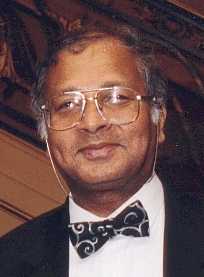 |
-Gyan Fernando Dr Gyan Fernando (55) is the Home Office forensic pathologist for Devon & Cornwall and is based at the Devon & Cornwall Police Headquarters, Exeter, England. The views expressed here are his own views and do not reflect that of the Home Office or the Devon & Cornwall Constabulary. |
Order Toxic Terror by clicking here.
Order The MIT Press Books by clicking here.
 Request a PDF file of this review by clicking here. (If your screen resolution can not be increased, or if printing this page is giving you problems like overlapping of graphics and/or tables etc, you can take a proper printout from a pdf file. You will need an Acrobat Reader though.)
N.B. It is essential to read this journal - and especially this review as it contains several tables and high resolution graphics - under a screen resolution of 1600 x 1200 dpi or more. If the resolution is less than this, you may see broken or overlapping tables/graphics, graphics overlying text or other anomalies. It is strongly advised to switch over to this resolution to read this journal - and especially this review. These pages are viewed best in Netscape Navigator 4.7 and above.
-Anil Aggrawal


 [ Major links ]
[ Aims and Objectives ] [ FAQ ] [ Editorial Board ] [ Contributing Partners ] [ Sitemap ]
[ Paper/Thesis submission guidelines ] [ Editorials - Cumulative Index ] [ Discussion ] [ Chat room ] [ Be our sponsor! ]
[ Cumulative index of Book Reviews sorted by | Publishers | General Interest Books | Technical Books ] [ Animated Reviews ] [ Featured Reviews ] [ E-books ]
[ Reviews with Quizzes ] [ Links ] [ Submit books/journals/software/multimedia for review ] [ journal CD ] [ History of the Journal ] [ Interviews ] [ Credits ]
[ Cumulative index of | Theses/dissertations | [ Online Courses ] [ Awards ] [ Anil Aggrawal's Internet Journal of Book Reviews - Sister Publication ]
[ Cumulative reviews of Software/Multimedia | Books on CD/Audio tapes ] | Calenders | Models ] [ contact us ]
[ Undergraduate section | Postgraduate section ] [ Forensic gadgets/toys/other tidbits ]
Books for review must be submitted at the following address.
Professor Anil Aggrawal (Editor-in-Chief)
Anil Aggrawal's Internet Journal of Forensic Medicine and Toxicology
S-299 Greater Kailash-1
New Delhi-110048
India
Click here to contact us.
This page has been constructed and maintained by Dr. Anil Aggrawal, Professor of Forensic Medicine, at the Maulana Azad Medical College, New Delhi-110002. You may want to give me the feedback to make this pages better. Please be kind enough to write your comments in the guestbook maintained above. These comments would help me make these pages better.
 IMPORTANT NOTE: ALL PAPERS APPEARING IN THIS ONLINE JOURNAL ARE COPYRIGHTED BY "ANIL AGGRAWAL'S INTERNET JOURNAL OF FORENSIC MEDICINE AND TOXICOLOGY" AND MAY NOT BE REPOSTED, REPRINTED OR OTHERWISE USED IN ANY MANNER WITHOUT THE WRITTEN PERMISSION OF THE WEBMASTER
Questions or suggestions ? Please use ICQ 19727771 or email to dr_anil@hotmail.com
Page Professor Anil Aggrawal via ICQ

|


