

|
 OTHER REVIEWS IN THIS ISSUE OTHER REVIEWS IN THIS ISSUE Pages: |1|
2|
3|
4|
5|
6|
7| Pages: |1|
2|
3|
4|
5|
6|
7|
[Popular Books Section]
|

|
AN ESSENTIAL PRIMER ON CLINICAL TOXICOLOGY
|
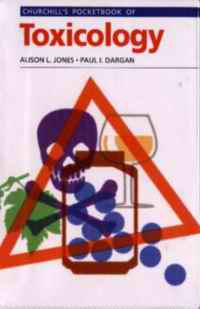
 Churchill's Pocketbook of Toxicology, 1st Edition, 2001 by Alison L. Jones and Paul I. Dargan
Churchill Livingstone (An imprint of Harcourt Publishers Ltd), Harcourt Place, 32, Jamestown Road, London NW1 7BY. XII, 162 pages, ISBN 0443064768. Price not mentioned.
 |
Acute poisonings rank among the most common medical emergencies today. According to some estimates, about 20% of all admissions in the emergency wards of hospitals comprise of cases of acute poisonings. With the proliferation of all kinds of drugs and chemicals around us, the probability of ingestion of these substances - either accidentally or with a suicidal intention - has increased manifold. Increased use of narcotics, drugs of abuse and designer drugs hasn't helped the situation either. And to manage these patients effectively, the clinician must be well-versed with signs and symptoms, appropriate lab investigations, and management of this amazingly vast variety of chemicals and drugs. How does the hapless clinician cope up with this situation?
To be sure, there are a number of excellent texts available in the market which offer excellent advice on management of most poisons (Goldfrank's Toxicological Emergencies, 6th Edition is a good example). But it is unthinkable for a busy clinician to be able to "stuff" Goldfrank in his pocket, and go about doing his duties! Ask most youngsters, and they would tell you that they would much rather prefer to have a ready reference kind of book, which they could carry to their wards, flick it out as and when required and look up the specific information they want at that very point in time. For instance, if a clinician is faced with a rare and unique case of poisoning by, say, xylene, what does he do? Does he run back to his house, take out a massive tome on poisoning, read the essentials, and come back? Or is it possible for him to take out something very handy from his back pocket, look up the specific information at the very spot, administer the treatment accordingly and move on to the next bed? Well, it is, and the book under review is a perfect example of this latter situation.
 |
Most people agree I am a toxicology buff, and over the years have prepared a very large site on toxicology. I like reading everything on toxicology that I can lay my hands on, but I must admit, that when this book arrived for review, I was a little skeptical about it. It was such a tiny little book, that I had serious doubts it would be able to "teach" anybody anything. But when I began reading it, quite soon I realized - to my astonishment - that it had an amazingly huge amount of information, completely belying its size. And most of it is latest and up-to-date information. For instance, you can find sections on poisonings by such drugs as Viagra, and Zidovudine (a drug used in the treatment of AIDS). I am not aware of many toxicology books, which deal with poisonings with such drugs.
The book is divided in three sections. Section one is on Basic Principles; section two deals with drugs of abuse (such as cocaine) and other drugs which are mostly used in clinics (such as paracetamol, thyroxine and so on) and section three with substances which can actually be construed as poisons (such as lead, mercury, pesticides and so on).
Section 1 starts with the assessment of the patient. Vital and important information is given. Consider this: ABC of the patient has to be ensured first (Air way is clear, Breathing adequate and Circulation not compromised); how do you assess the suicidal intent of the patient; why is ipecacuanha not recommended now for induced emesis; when would you not use gastric lavage; which agents are not adsorbed by activated charcoal; what is multiple dose activated charcoal; how do you alkalinize the urine, and in which poisonings; what should be a doctor's attitude towards patients especially those who have self-administered poisons; what has to be your admission policy and so on. Nuggets such as these kept me engaged, and I kept reading them for a long time.
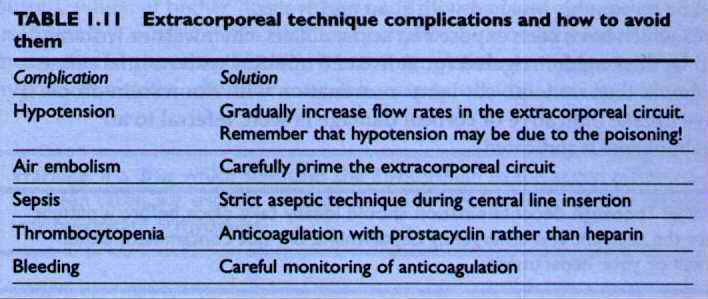 |
A good feature of the book is the innumerable number of illustrative tables which appear in the book throughout. There are 14 tables in section 1, 6 in section 2, and 5 in section 3 (a total of 25 tables!). Many tables in section one intrigued me. Consider these tables: Beck's scoring system for assessing the suicidal intent (table 1.5 on page 6), whole bowel irrigation complications and how to avoid them (table 1.9 on page 12), Antidotes (table 1.12 on pages 20 and 21), Toxic paracetamol doses (table 2.5 on page 75), and Interpretation of blood ethanol level (table 3.2 on page 111). Tables such as these serve as ready reckoners and are very easy to use. You may want to click on the table on the right to sample one such table.
This section also deals with such common problems as treating arrhythmias, chemical exposures, transvenous pacing, methemoglobinemia, serotonin syndrome, treatment of seizures or fits, management of body packers and so on. It discusses important medicolegal considerations in poisoning cases, with which most clinicians are generally unaware. What do you do when the patient refuses treatment? Can you enforce treatment of such patients? And how do you assess the competence of such patients to refuse treatment in the first place? When are the patients fit to be discharged? And Finally what do you do, when unfortunately the patient dies? Issues such as these are discussed at length, which makes the book a very valuable bedside companion.
Section 2 deals with clinical drugs and drugs of abuse. Almost every conceivable clinical drug is dealt with here - from ACE inhibitors to Zidovudine. And the information is arranged in alphabetical form. So you don't have to wade through the book frantically, when you are faced with, say, Risperidone poisoning. All you do is turn the pages till you reach 'R' and there quite easily lies the information you require.
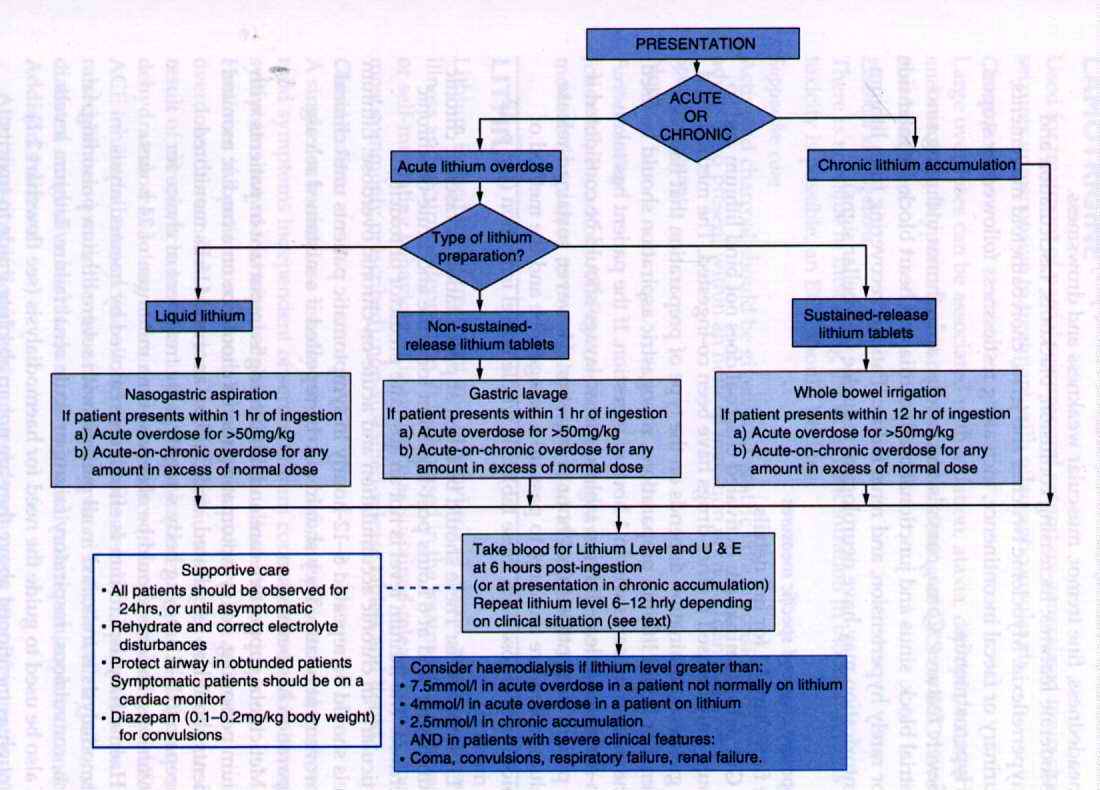 |
Some sampling of the clinical drugs dealt with here: H1 Antihistamines, calcium channel blockers, iron, isonizid, lithium, rifamicin, valproate and warfarin . And these are some of the drugs of abuse dealt with: Ecstasy, Gammahydroxybutyric acid (GHB), LSD, and Cocaine. Latest interesting information appears throughout. Read about such new drugs as sexstasy here (for the curious it is MDMA mixed with Viagra for increased sexual effects)! A good feature of this section is the use of flow charts. These are quite useful in diagnosis. A sampling on the left will tell you what I am talking about. You can click on the flow chart to enlarge it and actually read its contents.
Considering the small size of the book, I was amazed to see that the authors still have managed to find space for sections on "Further Reading". Generally in such small books - especially those which are "practical hands-on training" kind of books - such sections are missing. But this book gives many such sections. For instance, in the section on cocaine poisoning, the authors give us three important references for further reading at the end (page 47). Using these references, inquisitive persons can explore the subject of their interest in greater depth.
This section is quite similar to the section above, with the important difference that in this section those substances are dealt with which are more commonly acknowledged as poisons and toxins. Drugs of clinical use are not dealt with here. This section is also arranged in alphabetical form (from acids to veterinary products). Some sampling of the substances dealt with here: Adder bites, bleach, detergents, fluoride tablets, mushrooms, pesticides, petroleum distillates, strychnine and Toluene.
 |
The book is interspersed throughout with special Warning Boxes placed at suitable places. These are really very illustrative and give vital clues to the doctor. Consider this sampling: Warning! In all cases of arrhythmias, give oxygen, check electrolytes and establish i.v. access. Try to avoid use of antiarrhythmic drugs, as they are all arrhythmogenic and you can get into a descending spiral of negative inotropic and chronotropic activity (A warning box appearing under the heading "Treating arrhythmias": Page 18) ; Warning! Carbamazepine levels are of little clinical value as they do not correlate well with severity of poisoning. Falling serum concentrations are not reassuring when the patient remains hypotensive and comatose (A warning box appearing under the heading Carbamazepine: Page 43) and; Warning! Symptomatic hypocalcaemia (tetany, convulsions or arrhythmias) in ethylene glycol poisoning should be treated with i.v. calcium gluconate. Do not treat asymptomatic hypocalcaemia because this increases calcium oxalate deposition in the kidneys and brain (A warning box appearing under the heading Ethylene Glycol: Page 113). Open the book anywhere, and almost invariably you would find at least one such warning box. I found them very interesting indeed, especially as they could be read, understood, appreciated and enjoyed out of context too. So you really don't have to be reading about a particular poison to appreciate the warning box associated with that poison.
Who will be interested in this book most? Well, I would say that anyone interested in toxicology should lay his hands it. But the book should prove most valuable to young clinicians who have just begun their careers and are looking for a practical hands-on training manual to assist them in their clinical ward rounds. I tried stuffing it in my shirt pocket, and I could do it easily. They can keep it easily in their pockets and can read it not only when they need the information most (as in wards dealing with their patients), but even otherwise. For instance an intern or house surgeon would find it a very good bed side reading in his leisure time. Even expert toxicologists would find this book quite useful, especially for recapitulation of established norms and practices.
 Order Churchill's Pocketbook of Toxicology at a discount through this online journal by Clicking here
Order other books on Toxicology from amazon at a discount through this online journal by Clicking here
 Request a PDF file of this review by clicking here. (If your screen resolution can not be increased, or if printing this page is giving you problems like overlapping of graphics and/or tables etc, you can take a proper printout from a pdf file. You will need an Acrobat Reader though.)
N.B. It is essential to read this journal - and especially this review as it contains several tables and high resolution graphics - under a screen resolution of 1600 x 1200 dpi or more. If the resolution is less than this, you may see broken or overlapping tables/graphics, graphics overlying text or other anomalies. It is strongly advised to switch over to this resolution to read this journal - and especially this review. These pages are viewed best in Netscape Navigator 4.7 and above.
-Anil Aggrawal

 [ Major links ]
[ Aims and Objectives ] [ FAQ ] [ Editorial Board ] [ Contributing Partners ] [ Sitemap ]
[ Paper/Thesis submission guidelines ] [ Editorials - Cumulative Index ] [ Be our sponsor! ]
[ Cumulative index of Book Reviews sorted by | Publishers | General Interest Books | Technical Books ] [ Animated Reviews ] [ Featured Reviews ]
[ Reviews with Quizzes ] [ Links ] [ Submit books/journals/software/multimedia for review ] [ journal CD ] [ History of the Journal ] [ Interviews ] [ Credits ]
[ Cumulative index of | Theses/dissertations | Online Courses | Awards ] [ Anil Aggrawal's Internet Journal of Book Reviews - Sister Publication ]
[ Cumulative reviews of Software/Multimedia | Books on CD/Audio tapes | Calenders | Models ] [ contact us ]
Books for review must be submitted at the following address.
Professor Anil Aggrawal (Editor-in-Chief)
Anil Aggrawal's Internet Journal of Forensic Medicine and Toxicology
S-299 Greater Kailash-1
New Delhi-110048
India
Click here to contact us.
This page has been constructed and maintained by Dr. Anil Aggrawal, Professor of Forensic Medicine, at the Maulana Azad Medical College, New Delhi-110002. You may want to give me the feedback to make this pages better. Please be kind enough to write your comments in the guestbook maintained above. These comments would help me make these pages better.
 IMPORTANT NOTE: ALL PAPERS APPEARING IN THIS ONLINE JOURNAL ARE COPYRIGHTED BY "ANIL AGGRAWAL'S INTERNET JOURNAL OF FORENSIC MEDICINE AND TOXICOLOGY" AND MAY NOT BE REPOSTED, REPRINTED OR OTHERWISE USED IN ANY MANNER WITHOUT THE WRITTEN PERMISSION OF THE WEBMASTER
Questions or suggestions ? Please use ICQ 19727771 or email to dr_anil@hotmail.com
Page Professor Anil Aggrawal via ICQ

|