Paper 4:Road traffic accidents in the developing world: who are liable?: Anil Aggrawal's Internet Journal of Forensic Medicine: Volume 2, Number 1, Jan-June 2001
Received: October 16, 2000
Accepted: December 17, 2000
Ref: Eke, N.: Road traffic accidents in the developing world: who are liable?. Anil Aggrawal's Internet Journal of Forensic Medicine and Toxicology, 2001 ; Vol. 2, No. 1 (January-June 2001):
; Published: January 4, 2001, (Accessed:
Eke, N.: Road traffic accidents in the developing world: who are liable?. Anil Aggrawal's Internet Journal of Forensic Medicine and Toxicology, 2001 ; Vol. 2, No. 1 (January-June 2001):
; Published: January 4, 2001, (Accessed:
Email Dr. Ndubuisi Eke by clicking here

 : EMBASE Accession Number: 2004204938
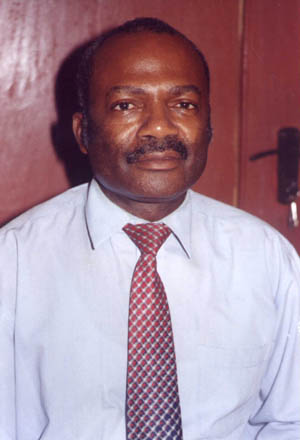 |
Dr. N. Eke (Click the photo to enlarge)
Road traffic accidents in the developing world: who are liable?
|
-EKE N, FRCSEd, FICS,
Department of Surgery,
University of Port Harcourt Teaching Hospital,
Port Harcourt,
Nigeria
|
Abstract (English)
The incidence of road traffic accidents (RTA) is rising world-wide. A review of the aetiological factors is presented. The aim is to determine responsibility and advocate preventive measures. The factors include man, the vehicle and the road. Alcohol and drugs of intoxication account for a large proportion of RTA world-wide. In the developing world, roads are poorly built and are poorly maintained. As a result, the roads have become death traps. Vehicles are poorly maintained due to poverty, ignorance and corruption among enforcement agents. All these factors are controllable by government policies.
Conclusion: Governments in the developing world owe their inhabitants the duty to keep roads safe and ensure that only road-worthy vehicles ply the roads. The UN and its agencies need to be involved to stem the rising tide of carnage from RTA in the developing world.
Abstract (German, Deutsch)
Das Vorkommen von Straße Verkehr Unfällen (() steigt weltweit. Eine Nachprüfung werden Faktoren des aetiological überreicht. Das Ziel soll Verantwortung bestimmen soll und befürworten Vorbeugungsmittel Maßnahme. Die Faktoren schließen Mann, das Fahrzeug und die Straße mitein. Alkohol und Drogen von Trunkenheit erklären ein großes Verhältnis von RTA weltweit. In der entwickelnden Welt, werden Straßen schlecht gebaut werden und behalten schlecht bei. Demzufolge haben die Straßen Tod Fallen wird. Fahrzeuge werden schlecht aufgrund Armut, Unwissenheit und Verdorbenheit unter Durchsetzung Agenten beibehalten. Alle diese Faktoren sind kontrollierbar durch Regierung Grundsätze. Schluß: Regierungen in der entwickelnden Welt schulden ihren Einwohnern die Pflicht, Straßen Safe behalten, zu und sichern daß nur Straße-würdige Fahrzeuge ply die Straßen. Der UN und seine Behörden müssen verwickelt werden zu, die steigenden Gezeiten von Blutbad von RTA in der entwickelnden Welt stammen.
Key Words
Road Traffic Accidents; Developing World; Liability.
Trauma is a major cause of morbidity and mortality in the general population worldwide. Trauma from road traffic accidents is rising in Nigeria 1,2 . As a special class of accidental trauma, road traffic accidents (RTA) constitute a major cause of accidental death in the developing world 3-5. In developing countries, road transportation is beset with a myriad of problems ranging from roads in dangerously poor conditions6 through road-unworthy vehicles to drunken and uncaring drivers 7,8 and pedestrians 9,10. In a recent study of accidental deaths in Port Harcourt in the Niger Delta area of Nigeria, RTA was the leading cause11.
Road traffic accidents RTA are a preventable scourge12. With man's invention of the wheel, the death knell has continued to toll for many, who are often innocent, but who may happen to be at the wrong place at the wrong time. Statistics has shown that mortality in road traffic accidents is very high among young adults in their prime and who constitute the work force 4,13-15. These are usually the breadwinners in many cultures. Innocent children are often direct victims of road mishaps and many become orphaned from these accidents. This imposes harsh social conditions made much worse in countries without social security services.
A study of accounts of accidents in the literature reveals some responsible factors 7,15-18. The essential factors involved in RTA's include the person, the machine and the road. Most tragic accidents often involve all three. Often the person is involved with only one of the other two. While most RTA's involve motor vehicles, bicycle or pedestrian accidents occur without motor vehicles19. A pedestrian may fall into an open manhole or drainage20,21. A critical appraisal of factors involved in RTA's is necessary to identify and apportion responsibility for their prevention and redress to victims. This is the thrust of this report.
Most factors involved in RTA are created or controlled by man. Man initiates the process that may yield a RTA by travelling. He or she may travel as a pedestrian, as a passenger in a vehicle or as the operator of a vehicle. To these extents, such a person bears some responsibility22 even if passively so as a passenger. A high proportion of accidents is directly blameable on man. The clearest example includes drunken drivers of motor vehicles5,7,23,24. The role of intoxication with drugs and alcohol is important in the aetiology of RTA world-wide8,25-29. The consumption of these intoxicating agents is voluntary. Man may also neglect to ensure that the machine is roadworthy and in good shape. Occasionally he or she may fail to adhere to safety regulations. In some countries, it is unlawful to transport children as front seat passengers. It is also an offence to have a passenger in the car without the safety belts fastened25,30,31. Regulations such as these are rarely found in developing countries17,18. When they are made, they are not enforced and may even be repealed due to lack of the will and ability to enforce or provide necessary enforcement facilities32.
A few road traffic injuries occur in pedestrians and cyclists involving dangerous road conditions but excluding motorised vehicles13. In number and severity, most road traffic accidents involve motor vehicles. While it is the onus of every vehicle operator to ensure the safety of the vehicle he or she operates, the state has agencies or authorities charged with the responsibility of ensuring that vehicles that ply public roads are in safe conditions. In Nigeria, there have always been the vehicle inspection officers (VIO). Perhaps, because these were overworked, but more likely because ineptitude or corruption had rendered them ineffective with regards to ensuring the roadworthiness of vehicles, the Federal Road Safety Corps (FRSC) was formed in 19882 and officially inaugurated in 1995. The full time operators are designated Road Marshals. In spite of the induction of volunteer senior civil servants, company executives and the academia as special marshals to boost morale and number, the FRSC soon tended towards the ways of the VIO's. The outfit soon lost its focus and became a political pawn. Today it is unclear whether the FRSC has been reabsorbed into the Police Force or not. The government is responsible for the VIO, the FRSC and all other agencies involved in the inspection of vehicles plying public roads including those who issue licenses to operators. It is also the duty of government to establish the machinery for the enforcement of its laws. Unfortunately this has eluded successive developing world governments with Nigeria as an example2,32. The state of the economy, another primary responsibility of government, also impacts on the epidemiology of RTA. Recently, in Nigeria, motorcycles have become a popular means of transportation especially in the urban areas as fewer people can maintain their cars32,33. Motorcycle and pedestrian accidents10,34 occur in vulnerable individuals lacking the relative physical protection afforded by cars and buses. These accidents result in major multiple injuries in the patients 33.
Road conditions are important aetiologic factors in RTA world-wide14,35-37. Rural roads tend to pose special and additional hazards14. In the developing world context, the road is a major factor in RTA5,6,38. Many roads have become death traps with potholes are dotted along the length and breadth of the roads. Often roads are blocked by broken-down vehicles or by garbage dumped by agencies of government. Road signs, on the very few occasions they are present, are often unhelpful if not deceptive. It is government that builds and has the responsibility to maintain these roads. Uncompleted projects are often hastily 'commissioned' often for the ulterior motive of futile immortalization of a name. The end result is that the roads are very poorly built and soon lapse into disrepair, posing danger to man and machine.
In established democracies, victims of road traffic accidents have access to redress when factors responsible for an accident are identified39,40. Agencies that own uncovered manholes or drainage facilities are held accountable for mishaps that are traceable to their facility. With rapidly advancing frontiers of global democratisation, trauma is expected to pose legal problems on responsibility and liability. Compensation claims are expected to rise with new interpretations and forensic analyses39,41,42. Furthermore clinicians attending to RTA victims are exposed to litigation for alleged negligence43,44. From the foregoing, liability for Road Traffic Accidents lies between man and government. On balance, developing world governments, being responsible for ensuring that vehicles that ply public roads meet certain minimum standards and being solely responsible for the construction and upkeep of roads, must accept the greater responsibility for the carnage on the roads. In the prevailing winds of global democracy, in addition to the plea of Asogwa for assistance2, the United Nations Organisation and its agencies such as World Health Organisation, Organization for Economic Cooperation and Development (OECD) and the World Bank, should set up an a body to monitor the roles of governments in road traffic accidents, in a bid to stem the rising tide of carnage on roads in developing countries.
REFERENCES
1. Oluwasanmi AJ. Road traffic trends in Nigeria. Acc Anal Prev 1993; 25:485-487.
2. Asogwa SE. Road traffic accidents in Nigeria: a review and a reappraisal. Accid Anal Prev 1992; 24:149-55.
3. Ohaegbulam SC. Analysis of 1089 cases of head injury. Afr J Med Med Sci 1978; 7:23-27.
4. Balogun JA, Abereoje OK. Pattern of road traffic accident cases in a Nigerian university teaching hospital between 1987 and 1990. J Trop Med Hyg 1992; 95:23-29.
5. Hijar M, Carrillo C, Flores M, Anaya R, Lopez V. Risk factors in highway traffic accidents: a case control study. Accid Anal Prev 2000; 32:703-709.
6. Odelowo EO. Factors affecting morbidity and mortality from road traffic accidents: a Nigerian peri-urban study. Afr J Med Med Sci 1993; 22:69-74.
7. Odero W. Alcohol-related road traffic injuries in Eldoret, Kenya. East Afr Med J 1998; 75:708-711.
8. Hijar M, Flores M, Lopez MV, Rosovsky H. Alcohol intake and severity of injuries on highways in Mexico: a comparative analysis. Addiction 1998; 93:1543-1551.
9. Asogwa SE, Obionu CN. Urban pedestrian accidents and the efficacy of a counter-measure. Centr Afr J Med 1985; 31:62-65.
10. Adesunkanmi AR, Oginni LM, Oyelami OA, Badru OS. Road traffic accidents to african children: assessment of severity using the injury severity score (ISS). Injury 2000; 31:225-228.
11. Eke N, Etebu EN, Nwosu SO. Road traffic accident mortalities in Port Harcourt, Nigeria. Anil Aggrawal's Internet Journal of Forensic Medicine and Toxicology 2000; Vol 1 No 2 (July-Dec 2000)
12. Anonymous. Road accidents: the unnecessary epidemic? Br Med J 1978; 1:547.
13. Luby S, Hassan I, Jahangir N, Rizvi N, Farooqi M, Ubaid S, Sadruddin S. Road traffic injuries in Karachi: the disproportionate role of buses and trucks. Southeast Asian J Trop Med Public Health 1997; 28:395-398.
14. Street JT, Winter D, Buckley S, Nicholson P, Twomey A. Trauma on rural roads: the role of a peripheral hospital. Injury 1999; 30:337-340.
15. Posada J, Ben-Michael E, Herman A, Kahan E, Richter E. Death and injury from motor vehicle crashes in Colombia. Rev Panam Salud Publica 2000; 7:88-91.
16. Ofosu JB, Abouammoh AM, Bener A. A study of road traffic accidents in Saudi Arabia. Accid Anal Prev 1988; 20:95-101.
17. Mock C, Amegashie J, Darteh K. Role of commercial drivers in motor vehicle related injuries in Ghana. Inj Prev 1999; 5:268-271.
18. Ansari S, Akhdar F, Mandoorah M, Moutaery K. Causes and effects of road traffic accidents in Saudi Arabia. Public Health 2000; 114:37-39.
19. Stutts JC, Hunter WW. Motor vehicle and roadway factors in pedestrian and bicyclist injuries: an examination based on emergency department data. Accid Anal Prev 1999; 31:505-514.
20. Chapple CR. Urethral injury. BJU International 2000; 86:318-326.
21. Trifa M, Njeh M, Bahloul A, Jemal S, Mhiri MN. [Traumatic rupture of the anterior urethra. Apropos of 18 cases]. Ann Urol (Paris) 1997; 31:313-317.
22. Asogwa SE. Some characteristics of drivers and riders involved in road traffic accidents in Nigeria. East Afr Med J 1980; 57:399-404.
23. Aguwa CN, Anosike EO, Akubue PI. Road accidents in Nigeria: level of alcohol in the blood of automobile drivers. Centr Afr J Med 1982; 28:171-174.
24. Zador PL, Krawchuk SA, Voas RB. Alcohol-related relative risk of driver fatalities and driver involvement in fatal crashes in relation to driver age and gender: an update using 1996 data. J Stud Alcohol 2000; 61:387-395.
25. Mao Y, Zhang J, Robbins G, Clarke K, Lam M, Pickett W. Factors affecting the severity of motor vehicle traaffic crashes involving young drivers in Ontario. Inj Prev 1997; 3:183-189.
26. Albery IP, Strang J, Gossop M, Griffiths P. Illicit drugs and driving: prevalence beliefs and accident involvement among a cohort of current out-of-treatment drug users. Drug Alcohol Depend 2000; 58:197-204.
27. Seymour A, Oliver JS. Role of drugs and alcohol in impaired drivers and fatally injured drivers in the Strathclyde police region of Scotland, 1995-1998. Forensic Sci Int 1999; 103:89-100.
28. Carrigan TD, Field H, Illingworth RN, Gaffney P, Hamer DW. Toxicological screening in trauma. J Accid Emerg Med 2000; 17:33-37.
29. McDonald A, Duncan ND, Mitchell DI. Alcohol, cannabis and cocaine usage in patients with trauma injuries. West Indian Med J. 1999; 48:200-202.
30. Tingvall C. Children in cars. Some aspects of the safety of children as car passengers in road traffic accidents. Acta Paediatr Scand Suppl 1987; 339:1-35.
31. McCarthy M. The benefit of seat belt legislation in the United Kingdom. J Epidemiol Community Health 1989; 43:218-222.
32. Falope IA. Motorcycle accidents in Nigeria. A new group at risk. West Afr Med J 1991; 10:187-189.
33. Odelowo EO. Pattern of trauma resulting from motorcycle accidents in Nigerians: a two-year prospective study. Afr J Med Med Sci 1994; 23:109-112.
34. Odelowo EO. Pattern of pedestrian injuries from road traffic accidents in Nigerians. West Afr Med J 1992; 11:130-134.
35. Pedriel G. [Visual information and road safety]. Bull Acad Natl Med 1994; 178:1075-1082.
36. Crilly M. Contributory factors to traffic accident deaths identified at coroner's inquest. J Public Health Med 1998; 20:139-143.
37. Leden L, Hamalainen O, Manninen E. The effect of resurfacing on friction, speeds and safety on main roads in Finland. Accid Anal Prev 1998; 30:75-85.
38. Tandon JN, Kalra A, Kalra K, Sahu SC, Nigam CB, Qureshi GU. Profile of accidents in children. Indian Pediatr 1993; 30:765-769.
39. Bryant B, Mayou R, Lloyd-Bostock S. Compensation claims following road accidents: a six-year follow-up study. Med Sci Law 1997; 37:326-336.
40. Bennun IS, Bell P. Psychological consequences of road traffic accidents. Med Sci Law 1999; 39:167-172.
41. Grobbelaar AO, Albertyn R, Bass DH. Financial compensation following road traffic injury: who is footing the bill? S Afr Med J 1992; 82:271-272.
42. Batten PJ, Penn DW, Bloom JD. A 36-year history of fatal road rage in Marion County, Oregon: 1963-1998. J Forensic Sci 2000; 45:397-399.
43. Corcoran M. What is negligence? BJU International 2000; 86:280-285.
44. Goodwin H. Litigation and surgical practice in the UK. Br J Surg 2000; 87:977-979.
*Corresponding author and requests for clarifications and further details:
Dr. Ndubuisi Eke,
Dr N Eke, FRCSEd, FICS,
27 Old Aba Road,
PO Box 5575, Port Harcourt.
NIGERIA.
Phone/Fax: 234 84 231337 or 611296
N.B. It is essential to read this journal - and especially this paper as it contains several tables and high resolution graphics - under a screen resolution of 1600 x 1200 dpi or more, and preferably on a 17" or bigger monitor. If the resolution is less than this, you may see broken or overlapping tables/graphics, graphics overlying text or other anomalies. It is strongly advised to switch over to this resolution to read this journal - and especially this paper. These pages are viewed best in Netscape Navigator 4.7 and above.
-Anil Aggrawal
Click here to contact us.
 This page has been constructed and maintained by Dr. Anil Aggrawal, Professor of Forensic Medicine, at the Maulana Azad Medical College, New Delhi-110002. You may want to give me the feedback to make this pages better. Please be kind enough to write your comments in the guestbook maintained above. These comments would help me make these pages better.
 IMPORTANT NOTE: ALL PAPERS APPEARING IN THIS ONLINE JOURNAL ARE COPYRIGHTED BY "ANIL AGGRAWAL'S INTERNET JOURNAL OF FORENSIC MEDICINE AND TOXICOLOGY" AND MAY NOT BE REPOSTED, REPRINTED OR OTHERWISE USED IN ANY MANNER WITHOUT THE WRITTEN PERMISSION OF THE WEBMASTER
Questions or suggestions ? Please use ICQ 19727771 or email to dr_anil@hotmail.com
Page Professor Anil Aggrawal via
ICQ



![Investigation of Road Traffic Fatalities: An Atlas by Jay Dix, Michael Graham, Randy Hanzlick [CRC Press]](http://images.amazon.com/images/P/0849323681.01.MZZZZZZZ.jpg)
![The Aftermath of Road Accidents: Psychological, Social and Legal Consequences of an Everyday Trauma by Margaret Mitchell [Routledge]](http://images.amazon.com/images/P/0415130522.01.MZZZZZZZ.jpg)
![Roadway Safety and Tort Liability, Second Edition by John C. Glennon, Paul F. Hill, John C. Glennon [Lawyers & Judges Publishing Company, Incorpor; 2nd edition]](http://images.amazon.com/images/P/193005694X.01.MZZZZZZZ.jpg)
![Statistics Of Road Traffic Accidents In Europe And North America, 2003 [United Nations Publications]](http://images.amazon.com/images/P/9210163591.01.MZZZZZZZ.jpg)
![International Handbook of Road Traffic Accidents and Psychological Trauma by Edward J. Hickling, Edward B. Blanchard [Elsevier Science]](http://images.amazon.com/images/P/008042760X.01.MZZZZZZZ.jpg)