|
 OTHER REVIEWS IN THIS ISSUE OTHER REVIEWS IN THIS ISSUE Pages: |1|
2|
3|
4|
5|
6|
7| Pages: |1|
2|
3|
4|
5|
6|
7|
[Popular Books Section]
|

|
|
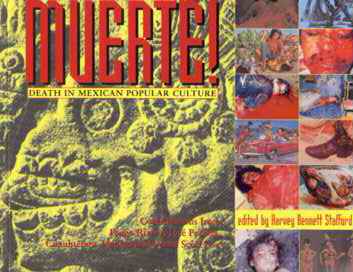
 Muerte! Death in Mexican Popular Culture
Edited by Harvey Bennet Stafford. Contributions from Diego Rivera, José Posada, Cuautémoc Medina and Lorna Scott Fox
Muerte! Death in Mexican Popular Culture
Edited by Harvey Bennet Stafford. Contributions from Diego Rivera, José Posada, Cuautémoc Medina and Lorna Scott Fox
First Edition, 2001, Deluxe Full-color Paperback Original, Feral House, P.O. Box 13067, Los Angeles, CA 90013, USA. Phone: 213 689-4502: Fax: 213 689-4728: 102 Pages: ISBN 0-922915-59-8: Price $16.95
 Visit Feral House Website
 |
I still remember very clearly how I felt when I first saw a dead man in my life. I was a first year medical student (way back in 1973), and it was probably our second day in the medical college. We were all filled with enthusiasm and expectations. Our anatomy professor came to the class and told us it was time for dissection. Till then, as biology students we had been cutting up rats, mice, earthworms, cockroaches, frogs, - even rabbits and dogs, but the excitement of dissecting a human being was different.
 |
I had never done that before, and I eagerly looked forwards to it. Soon we were led into a big dissection hall and the moment I entered the hall, my eyes widened with a strange surrealistic feeling. Lying before me were tens of dead naked human beings -both males and females- on different dissection tables (we were a class of hundred medical students, and about four had to share one table; so I believe there were twenty-five tables in all, with as many cadavers), their skin dark and parchment like, their eyes expressionless, all lying with their faces upwards looking blankly up the ceiling. It is difficult to forget that moment even now after a gap of thirty years.
 |
But soon I got used to the dead. In fact a point came, when I started loving the dead. To the extent, that when the moment came for me to chose a discipline for specialization (in 1979), I chose Forensic Medicine, although I had a very good chance of getting a seat in otorhinolaryngology (more commonly known among lay people as ENT).
 |
In fact my professor in the ENT department where I was working as a house surgeon, advised me not to join Forensic Medicine as a career, because the only thing I was likely to see in that specialty were dead bodies. But I was adamant, as I had come to love the dead so much. Since that day I have seen so many mangled bodies, severed heads, burnt limbs, broken skulls, that they fail to stir me any more.
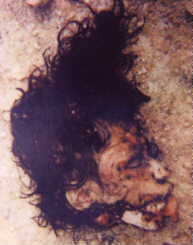 |
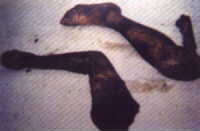
I continue my work nonchalantly among this macabre stuff. Frequently I would dissect a headless body, send tissues for DNA analysis, find out the cause of death, hand over the body to the police, write the report and then immediately afterwards rush to the University coffee house for a quick cup of coffee. The fact that I had just encountered a mangled headless body would fail to deter me from going to coffee house, or pursuing my other daily routines. In fact, such gory stuff simply failed to elicit any emotion inside me.
 |
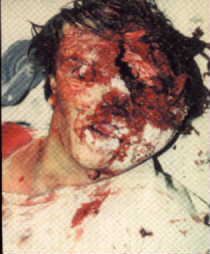
Till the book under review arrived by post one day. There were some accompanying leaflets which warned me of its graphic contents. The back cover of the book too cried loudly in the red, "Warning! Extremely Graphic". But I smiled wryly and opened the book. And lo! Against all expectations, I was filled with the same feeling that I had thirty years back when I entered that dissection hall. This book was full of such unbelievable photographs, that I took some time to believe they were real. The book contained hundreds of gory photographs, and so if you are a lover of the gory and bizarre - as I am - you are certain to lap up this book.
The book actually came with a sister publication - Death Scenes - about which we would be talking later, and I found both books extremely absorbing. The only difference between the two was that while Muerte! has color photographs, Death Scenes has Black and White. But both are almost similar in content, style, approach and ethos.
 |
While Death Scenes has been put together by Jack Huddleston, (a bona-fide officer with the Santa Monica and Los Angeles police departments), who put together his own collection assiduously collected over the years (the book is however edited by Sean Tejaratchi with text by Katherine Dunn), Muerte! has been put together by a journalist and artist Harvey Bennett Stafford, who bought most of his photographs from tabloids in Mexico.
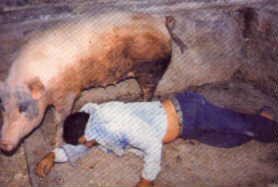 |
Which brings us to the cult of worshipping death in Mexico. The country has traditionally celebrated and embraced death. Aztecs - the culture that peopled Mexico in mediaeval times - regularly sacrificed people at the altar of their Sun God. They believed the Sun would not rise the next day, if they did not sacrifice a human daily. There was little difference in their culture between sacrificing a human and sacrificing an animal. That spirit has continued to this day. In the modern times, several tabloids have mushroomed which celebrate death in their own macabre way. They publish gory photographs, which would make many of us throw up. Yet, the Mexicans like this stuff so much, that the king of these magazines Alarma! sells as many fifteen million copies every week! This magazine came up first on April 17, 1963, and since then has continued uninterrupted (save for a brief interregnum between 1986 and 1991 when it was censored). Soon many imitations like Alarde!, Enlace! and Poliester came up, all of which are doing very well. Their main fare of course is just showing up the dead in most bizarre fashion. As forensic pathologists we are quite used to seeing such bizarre scenes, and yet I was quite astounded at these photographs. One can only guess, how an ordinary human being would take such photographs.
 |
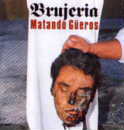 |
The editor of this book Stafford is a photographer who first encountered this tabloid gore when he went to Mexico to attend the marriage of his friend. He spotted Alarma! while killing time in Mexico city, and so gripped was he by the pictures in it, that he immediately bought not only that particular issue, but all the back issues that he could lay his hands on. He is an artist of the macabre, and used these photographs for his own paintings. Soon afterwards he thought of producing a book containing some of the best photographs from those tabloids. To put this book together he traveled back to Mexico along with his friend Greg Lipman. In his opening account Stafford graphically tells us of his encounters with the Mexicans while trying to buy copyrights. When he enters the office of one of such tabloids Alarde! (an Alarma! imitator), he finds it quite congested and shabby with about five desks (no computers on any of the tables - only typewriters!).
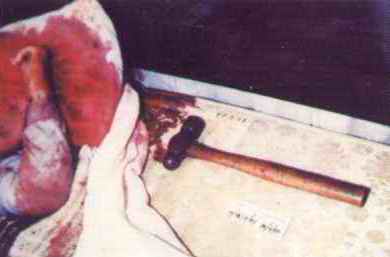
The editor Miguel is a man in his late 30's and regards them with suspicion in the beginning, but when he smells money (and their true credentials), he not only agrees to give them the photographs, but goes to the extent of sending them along with his reporters to an actual crime scene. The reporters meander madly through the traffic (so reckless are they in driving that at one point in time Stafford begins thinking he would be the subject of their next issue!) and take him to the crime scene, where they do not find much (we are told that only one in five leads actually materializes). On their return they meet a police chief - a burly fat man - who buys their story that Stafford is a New York Times reporter, and arranges further meetings for them, not the least important of which is the meeting with the Station's coroner. Well, I could go on and on, but perhaps you would like to buy the book and read the entire story yourself - and see those stunning photographs. There are probably more than hundred gory photographs in this book, but for obvious reasons, I have carefully chosen the least astounding of these.
 |
The book gives you a mixed fare, breaking routine at some places to give you some very explicit erotic photographs too. These too come from these tabloids. One which captured my attention was of that of buxom Gloria Trevi (popularly known as the Mexican Madonna), in a white brassiere and panties, with a couple of puppy dogs smelling some interesting part of her anatomy. There is a full section called Crossword puzzles, where we see more of such beauties, plastered over some chequered squares looking like crossword puzzles. I couldn't understand much as everything was in Spanish - but then who cares!
How would I rate this book? In one word - excellent! If you love the gory, macabre, bizarre and surrealistic as much I do, you are going to thank me, I recommended this book to you.
Order Muerte! by Clicking here
For more Feral Books click here
For more picture books of a similar nature (by all publishers), please click here
 Request a PDF file of this review by clicking here. (If your screen resolution can not be increased, or if printing this page is giving you problems like overlapping of graphics and/or tables etc, you can take a proper printout from a pdf file. You will need an Acrobat Reader though.)
N.B. It is essential to read this journal - and especially this review as it contains several tables and high resolution graphics - under a screen resolution of 1600 x 1200 dpi or more. If the resolution is less than this, you may see broken or overlapping tables/graphics, graphics overlying text or other anomalies. It is strongly advised to switch over to this resolution to read this journal - and especially this review. These pages are viewed best in Netscape Navigator 4.7 and above.
-Anil Aggrawal

 [ Major links ]
[ Aims and Objectives ] [ FAQ ] [ Editorial Board ] [ Contributing Partners ] [ Sitemap ]
[ Paper/Thesis submission guidelines ] [ Editorials - Cumulative Index ] [ Be our sponsor! ]
[ Cumulative index of Book Reviews sorted by | Publishers | General Interest Books | Technical Books ] [ Animated Reviews ] [ Featured Reviews ]
[ Reviews with Quizzes ] [ Links ] [ Submit books/journals/software/multimedia for review ] [ journal CD ] [ History of the Journal ] [ Interviews ] [ Credits ]
[ Cumulative index of | Theses/dissertations | Online Courses | Awards ] [ Anil Aggrawal's Internet Journal of Book Reviews - Sister Publication ]
[ Cumulative reviews of Software/Multimedia | Books on CD/Audio tapes | Calenders | Models ] [ contact us ]
Books for review must be submitted at the following address.
Professor Anil Aggrawal (Editor-in-Chief)
Anil Aggrawal's Internet Journal of Forensic Medicine and Toxicology
S-299 Greater Kailash-1
New Delhi-110048
India
Click here to contact us.
This page has been constructed and maintained by Dr. Anil Aggrawal, Professor of Forensic Medicine, at the Maulana Azad Medical College, New Delhi-110002. You may want to give me the feedback to make this pages better. Please be kind enough to write your comments in the guestbook maintained above. These comments would help me make these pages better.
 IMPORTANT NOTE: ALL PAPERS APPEARING IN THIS ONLINE JOURNAL ARE COPYRIGHTED BY "ANIL AGGRAWAL'S INTERNET JOURNAL OF FORENSIC MEDICINE AND TOXICOLOGY" AND MAY NOT BE REPOSTED, REPRINTED OR OTHERWISE USED IN ANY MANNER WITHOUT THE WRITTEN PERMISSION OF THE WEBMASTER
Questions or suggestions ? Please use ICQ 19727771 or email to dr_anil@hotmail.com
Page Professor Anil Aggrawal via ICQ

|