Anil Aggrawal's Internet Journal of Forensic Medicine and Toxicology
Volume 3, Number 2, July - December 2002
Book Reviews: Popular Books Section
(Page 6 a - Review by Gyan Fernando, UK)
 OTHER REVIEWS IN THIS ISSUE OTHER REVIEWS IN THIS ISSUE Pages: |1|
2|
3|
4|
5|
6|
7|
8|
9|
10|
11|
12|
13|
14|
15|
16|
17|
18|
19|
20| Pages: |1|
2|
3|
4|
5|
6|
7|
8|
9|
10|
11|
12|
13|
14|
15|
16|
17|
18|
19|
20|
[Popular Books Section]
[Books on CD/Audio Tapes]
[Software/Multimedia]
[Online Courses]
|



|
|

 Fitted in: The Cardiff 3 and The Lynette White Inquiry by Satish Sekar (co-editors: Andy Soutter and Michele Bailey)
The fitted In Project, c/o Satish Sekar, 8 Ridding Lane, Greenford, Middlesex, UB6 0JY, UK: 294 Pages: Publication Date - 1997, ISBN 0 - 9527325 - 0 - 5. Price: £10.99
 |
|
In spite of efforts of the Criminal Justice system to prevent miscarriages of justice a number of high profile cases have occurred in Britain in recent times. Probably the best known among these is the case of the "Birmingham Six" - six men convicted of the Birmingham pub bombings in 1975. The least known case is probably that of the "Cardiff Three"
In the early hours of the 14th of February 1988, St. Valentine's Day, a Cardiff prostitute by the name of Lynette White was brutally murdered. Murders of prostitutes are notoriously difficult to investigate for obvious reasons. Several remain unsolved. There is a tendency for the community to close ranks and there is the difficulty of tracing and interviewing the clients.
 |
As far as the South Wales Police were concerned they had a previous notorious failure on their hands. Nora Wilfred, an Asian prostitute was stabbed more than twenty times in December 1972. That inquiry was complicated by the fact that the murder occurred on the same day as a rugby international at Cardiff. It was to prove impossible to trace all those who had attended the match.
When Lynette White was killed there is no doubt the police were spurred on by the memory of their previous "failure".
In recent times it has become common practice to 'link' murders but unfortunately it would appear that the police failed to investigate the possibility that the same person could have killed both women.
As was to be expected Steve Miller, the boyfriend and pimp of Lynette White, was picked up for questioning within hours of discovery of the body. He was then released without charge. His clothing was examined forensically and a sample of his blood was tested against blood found in the flat. The results were negative. His car was virtually taken apart and forensically tested. There was no forensic evidence against him. In spite of the fact that there was considerable blood spattering at the scene he was forensically clean!
 ...As was to be expected Steve Miller, the boyfriend and pimp of Lynette White, was picked up for questioning within hours of discovery of the body. He was then released without charge. His clothing was examined forensically and a sample of his blood was tested against blood found in the flat. The results were negative... ...As was to be expected Steve Miller, the boyfriend and pimp of Lynette White, was picked up for questioning within hours of discovery of the body. He was then released without charge. His clothing was examined forensically and a sample of his blood was tested against blood found in the flat. The results were negative...
|
Within days the South Wales Police announced that they had a prime suspect, a white man seen in blood stained clothing in a distressed state outside Lynette's flat. A photo fit was released and a Detective Chief Superintendent went on record to say "this man almost certainly had the blood of the deceased on him."
Eventually Miller and four other men would stand trial with no forensic evidence against them. It is puzzling why the South Wales Police failed to eliminate them. Miller was forensically clean and did have an alibi. He was playing pool in a nightclub. One of the other defendants, Yusef Abdullahi, had a cast iron alibi. At the time of the murder he was miles away and at work in a breakers yard.
Lynnette had not only been brutally murdered but mutilated post-mortem with attempts to cut her hands off.. Clearly the work of a psychopath
A psychological profile indicated a single white male with psychopathic tendencies as the possible murderer but very soon, inexplicably and effortlessly, the inquiry changed gear. The police went from a single white male to a few black men overnight! A white suspect referred to as Mr X was eliminated on the basis of lack of forensic evidence against him but the black men were not eliminated on the same criterion.
[These were the days of committal hearings and one would have expected the case to be thrown out at this stage. A committal hearing is where the evidence is presented to a magistrate with the aim of deciding if the defendants have a case to answer. If the magistrate decides that there is a case to be answered then the case is sent to the Crown Court. If not the case can be thrown out. Committal hearings were discontinued a few years ago.]
|
It was clear that Miller's "confession" was extracted from him by a combination of deception, psychological abuse and threats. Indeed at one stage Miller was "allowed to see" police photographs of his late girlfriend taken at the scene of death. Added to this was the expert evidence that Miller was suggestible and of low IQ. Amazingly this latter evidence was rejected without an opposing view from an expert for the Prosecution. Scientific evidence or expert evidence can only be countered by another expert in the same field and not by a judge.
In spite of this and other aspects of the case the case was sent for trial.
The trial was heard at Swansea although originally set to have been heard at Cardiff. Swansea is completely different from Cardiff with only a very small black population. A jury of one's peers means a jury of people who come from a similar walk of life to the defendant. Swansea had virtually nothing in common with the dock areas of Cardiff.
The trial came to a dramatic halt when the judge suffered a fatal heart attack during the closing stages. By this stage the reliability of the witnesses were obviously in question but in spite of this the Crown Prosecution Service (CPS) did not drop the case.
Three of the defendants were found guilty at the second trail. This was one of the longest murder trials in Britain, lasting 197 days. An appeal was launched four years after the arrest of the Cardiff Three as they came to be called. This time around they had the expertise of Michael Mansfield QC. Mansfield proved conclusively that Miller's confession had been extracted by lying to him.
In fairness to the police it must be said that part of the problem was that, at least Miller, had very poor legal representation both during the interviews and later at the trial. One would have expected a competent solicitor to intervene vigorously given the manner in which the interviews were conducted. Their convictions were squashed on appeal but the campaign to clear their names had only begun. The three Appeal Court judges had ruled that Miller's "confession" had been a "travesty of an interview". The South Wales Police maintained that the three got away on a technicality and refused to reopen the case.
The case remains open to this day and the real killer of Lynette White is yet to be found.
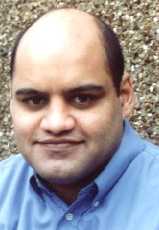
The author of this book Satish Sekar is a well-known freelance journalist specialising in legal issues. This book is a fascinating and well-researched masterpiece of investigative journalism and sheer doggedness on the part of the author.
A key scientific issue in this murder investigation were bloodstains found on Lynette White's jeans and socks and another found on the wallpaper. The stain on the wallpaper suffered degradation as a result of Ninhydrin treatment of the wallpaper for developing fingerprints.
[A logical way of tackling the problem of fingerprints vs. bloodstains is simple. If a bloodstain is visible then take a swab of it first before applying Ninhydrin to the surface except where the bloodstain is a fingerprint. In the latter situation there is no need for Ninhydrin.]
This was the early days of DNA profiling. Over the years DNA profiling has advanced as a result of DNA 'amplification ' (the Polymerase Chain Reaction) and the use of Single - Locus profiling.
Satish Sekar's knowledge of DNA profiling is quite formidable and shows a good grasp of the principles involved, but he has the knack of explaining complex scientific issues in simple lay language. His description of DNA profiling (on pages 247-251) is a concise, easily understandable but a scientifically accurate summary. It is quite obvious that Sekar has done his homework well.
The book starts off with forewords by the well-known Queen's Counsel, Michael Mansfield as well as others involved in the case. Part one of the book, titled "The Inquiry", sets the background, the initial murder investigation and the events leading to the arrest and charging of the suspects. This section is written in a gripping style with vast amounts of background material. There are twists and turns including the link to a supergrass responsible for the Ged Corley Affair.
Part two covers the trials. Sekar analyses every aspect of the court proceedings and highlights the Prosecutions dogged determination to get a conviction at any cost and the failures of the Defence. Amazingly, the Defence did not think it was important to play the tapes covering the whole of Miller's police interview. Apart from the bullying tactics the police never asked Miller as to who actually wielded the knife and what actually happened to the knife. The murder weapon was never found. One would expect that information to be contained in a voluntary confession. The final part is titled "The Whitewash". A section titled "Conclusion" and several appendices and other addenda follows this. Whitewash covers the appeal and the subsequent reopening of the case and is a through analysis of the bloodstain evidence.
Appendix 2 (The Aftermath of the Forensic Submission) consists of a series of letters between the local Member of Parliament, the Home Secretary and Satish Sekar himself.
The very last section is a summary of the key players - a useful feature given the number of players involved - and a chronology.
The story doesn't end here ........There appears to have been considerable resistance on the part of the police and the Forensic Science Service (FSS) to submit the DNA samples to an expert outside Britain. The FSS has a virtual monopoly in matters related to forensic science and enjoys the patronage of the police. Even today there is no effective competition. This is a worrying state of affairs.
The book is a rather disturbing read and shakes the very foundations of the British legal system. Where crimes are horrific, high profile, with massive media coverage and public alarm there is a considerable burden placed on the police.
...The book is a rather disturbing read and shakes the very foundations of the British legal system. Where crimes are horrific, high profile, with massive media coverage and public alarm there is a considerable burden placed on the police...
|
In an increasingly "performance related" society the success of a police investigation is judged by convictions. This creates an atmosphere of inadequacy and a feeling of under performance with the temptation to "round up the usual suspects" especially in acts of terrorism. This is undoubtedly what happened in the Birmingham Pub Bombing. A culture of "producing results" would inevitably lead to miscarriages of justice. Safeguards are in place to prevent miscarriages but some have already been withdrawn (e.g. committal proceedings) and the futures of others, such as trial by jury, are in the balance.
There is also an increasing unhealthy tendency, in the reviewer's opinion, for the police to depend entirely on science to the detriment of traditional investigative methods. This tendency is rather worrying. Whilst DNA and other technology does help considerably there is no substitute for traditional investigative procedures. The success or failure of a murder investigation in general terms depends on the information gathered in the first 48 hours or so.
The book highlights the glaring inadequacies of the British Criminal Justice System. The book exposes major flaws in the system and also in the application of forensic science examinations of trace evidence. The book is not only a historical record with meticulous analysis of events and the trial but is also a warning as to the dangers of feelings of inadequacy and panic overriding professionalism and impartiality.
...As Satish stresses the purpose of the book is not a witch-hunt of the South Wales Police but to learn the lessons that this case can teach us in order to prevent it from happening again. Apart from the scientific evidence two important lessons that can be learnt from this case is the manner in which the "confessions" were obtained and the use of police informers or "grasses"...
|
As Satish stresses the purpose of the book is not a witch-hunt of the South Wales Police but to learn the lessons that this case can teach us in order to prevent it from happening again. Apart from the scientific evidence two important lessons that can be learnt from this case is the manner in which the "confessions" were obtained and the use of police informers or "grasses". Almost invariably such informers are unreliable because they provide information in the expectation of a reward.
The research and investigations of Satish Sekar resulted in the reopening of the murder. It is a landmark publication at least in that respect.
Appendix: The Crown Prosecution Service (CPS)
The CPS was established in 1985. Prior to that the police were responsible for prosecuting the people that they had arrested. In theory at least the CPS is independent of the police. The CPS can discontinue a case or ask the police to provide more evidence. The role of the CPS in the case of the Cardiff Three is discussed in chapter 4 of the book.
The Crown Prosecution Service has headquarters in London and York and operates under a structure of 42 Areas in England and Wales. These Areas correspond to the 43 police forces in England and Wales with the London Area covering the operational boundaries of both City of London and Metropolitan Police Forces. The CPS Code for Crown Prosecutors can be found at their website http://www.cps.gov.uk
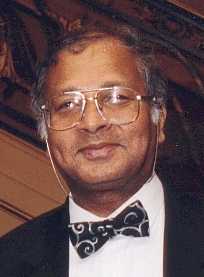 |
-Gyan Fernando Dr. Gyan C.A. FERNANDO is the Home Office Pathologist for Devon and Cornwall and the Force Pathologist for the Devon and Cornwall Constabulary. The views expressed in the above review reflect his own views and do not in anyway reflect the views of the Devon and Cornwall Constabulary. |
 Order this Book by clicking here
Or by contacting the author personally at:
Satish Sekar,
8 Ridding Lane,
Greenford, Middlesex,
UB6 0JY,
UK
e-mail: satish.sekar@ntlworld.com or satish.sekar@virgin.net
 There have been many Developments in the Lynette White Inquiry, since Sekar wrote his book. Readers wanting to read about them may want to click here.

Request a PDF file of this review by clicking here. (If your screen resolution can not be increased, or if printing this page is giving you problems like overlapping of graphics and/or tables etc, you can take a proper printout from a pdf file. You will need an Acrobat Reader though. You can also create a pdf file yourself by clicking here.)
To read the review of another book exposing a scandal, please click here.
N.B. It is essential to read this journal - and especially this review as it contains several tables and high resolution graphics - under a screen resolution of 1600 x 1200 dpi or more. If the resolution is less than this, you may see broken or overlapping tables/graphics, graphics overlying text or other anomalies. It is strongly advised to switch over to this resolution to read this journal - and especially this review. These pages are viewed best in Netscape Navigator 4.7 and above.
-Anil Aggrawal

 [ Major links ]
[ Aims and Objectives ] [ FAQ ] [ Editorial Board ] [ Contributing Partners ] [ Sitemap ]
[ Paper/Thesis submission guidelines ] [ Editorials - Cumulative Index ] [ Discussion ] [ Chat room ] [ Be our sponsor! ]
[ Cumulative index of Book Reviews sorted by | Publishers | General Interest Books | Technical Books ] [ Animated Reviews ] [ Featured Reviews ] [ E-books ]
[ Reviews with Quizzes ] [ Links ] [ Submit books/journals/software/multimedia for review ] [ journal CD ] [ History of the Journal ] [ Interviews ] [ Credits ]
[ Cumulative index of | Theses/dissertations | [ Online Courses ] [ Awards ] [ Anil Aggrawal's Internet Journal of Book Reviews - Sister Publication ]
[ Cumulative reviews of Software/Multimedia | Books on CD/Audio tapes ] | Calenders | Models ] [ contact us ]
[ Undergraduate section | Postgraduate section ] [ Forensic gadgets/toys/other tidbits ]
Books for review must be submitted at the following address.
Professor Anil Aggrawal (Editor-in-Chief)
Anil Aggrawal's Internet Journal of Forensic Medicine and Toxicology
S-299 Greater Kailash-1
New Delhi-110048
India
Click here to contact us.
This page has been constructed and maintained by Dr. Anil Aggrawal, Professor of Forensic Medicine, at the Maulana Azad Medical College, New Delhi-110002. You may want to give me the feedback to make this pages better. Please be kind enough to write your comments in the guestbook maintained above. These comments would help me make these pages better.
 IMPORTANT NOTE: ALL PAPERS APPEARING IN THIS ONLINE JOURNAL ARE COPYRIGHTED BY "ANIL AGGRAWAL'S INTERNET JOURNAL OF FORENSIC MEDICINE AND TOXICOLOGY" AND MAY NOT BE REPOSTED, REPRINTED OR OTHERWISE USED IN ANY MANNER WITHOUT THE WRITTEN PERMISSION OF THE WEBMASTER
Questions or suggestions ? Please use ICQ 19727771 or email to dr_anil@hotmail.com
Page Professor Anil Aggrawal via ICQ

|
