|

|
|
 Dental Autopsy, 1st Edition, by William E. Silver and Richard R. Souviron. Hard Bound, 10.1" x 7.2" x 0.6".
CRC Press LLC, 2000 Corporate Blvd., N.W., Boca Raton, Florida 33431, Phone - 1(800)272-7737, Fax - 1(800)374-3401. Publication Date June 23, 2009. 276 pages, ISBN-10: 1420070134; ISBN-13: 978-1420070132 (alk. paper). Price: $129.95
 Visit the Official site of this book by clicking here
Buy from Amazon by clicking here.
 |
The book under review is a comprehensive treatise on forensic odontology. It is organized for field and lab reference. One of the most valuable aspects of the book is that it has been illustrated with more than 300 color photos.
The main aim of the book is to educate the dental, medical and legal professions in the conduct of a forensic dental examination of the oral structures and its many ramifications in the criminal justice system as well as in civil litigation. The book must prove to be an essential resource for medical examiners, investigators, dental specialists, lawyers, and expert witnesses.
The value of the book is enhanced by the actual case law that it provides. For instance on page 151, it gives the first ever case in the United States, where a bitemark was used to link a suspect to the crime. The criminal - a person named Doyle - after committing a burglary, quite naively bit into some cheese that was available at the scene of crime. In this 1954 Texas case (State v. Doyle, Texas, 1954), Dr. William Kemp, a Texas dentist testified that the bites in the piece of cheese at the scene of crime was indeed made by the suspect Doyle! Interestingly in this case, the police obtained the sample bitemark evidence from Doyle without a court order. Doyle later argued (in appeal) that this was a violation of his Fifth Amendment rights (protection against self-incrimination). However the appellate court did not agree with his argument and allowed the prosecution.
 |
The book - which is one of the best in the field so far - has been written by Dr. William Silver and Dr. Richard Souviron. Silver is the deputy chief forensic odontologist for the Miami Dade Medical Examiner's Department. He has worked on numerous mass disasters and training programs, offering his expertise in dental identifications in the World Trade Center disaster, Hurricane Katrina, and the Miami Valujet crash. Dr. Richard Souviron is the chief forensic odontologist for the Miami Dade Medical Examiner's Department and is one of the founding forensic odontologists for the Odontology section of the American Academy of Forensic Sciences. He has been involved in several high profilebitemark cases and has appeared on Court TV, 60 Minutes, Forensic Files, Dateline, CNN, and BBC.
 Click here to read an exclusive interview with Dr. Silver and Dr. Souviron. Click here to read an exclusive interview with Dr. Silver and Dr. Souviron. |
Here is a list of book contents, so readers may know exactly what kind of information to expect in this book.
Chapter |
Title |
Page |
| 1 | Introduction to Forensic Odontology | 1 |
| 2 | Medical Autopsy | 13 |
| 3 | Forensic Odontology | 29 |
| 4 | Classification of Dental Remains | 51 |
| 5 | Role of Dental Professionals | 59 |
| 6 | Instrumentation | 65 |
| 7 | Crime Scene | 75 |
| 8 | Antemortem Records | 81 |
| 9 | Postmortem Records - The Dental Autopsy | 89 |
| 10 | Methods of Comparison and Identification | 117 |
| 11 | Mass Disaster | 133 |
| 12 | Facial Approximation | 145 |
| 13 | Odontoglyphics - Bitemarks | 151 |
| 14 | The Expert Witness | 195 |
| 15 | Psychological consequences | 225 |
| 16 | Professional Organizations | 227 |
| Final Note | 231 | |
| Appendix | 233 | |
| Bibliography | 261 | |
| Index | 265 | |
Excerpts from the book:
Here are some excerpts from the book, so reader can get some ideas as to what is contained within the book. This is what the authors have to say in chapter 13 (Odontoglyphics - Bitemarks) - pages 158 onwards.
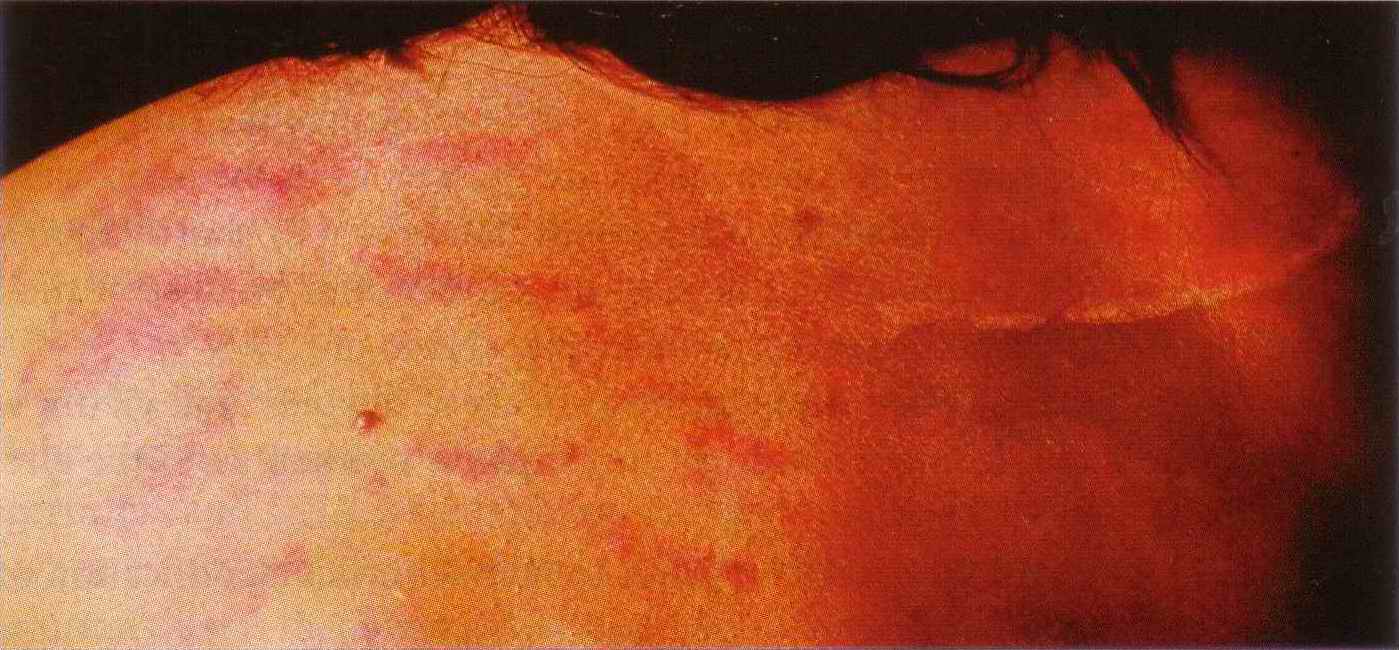 |
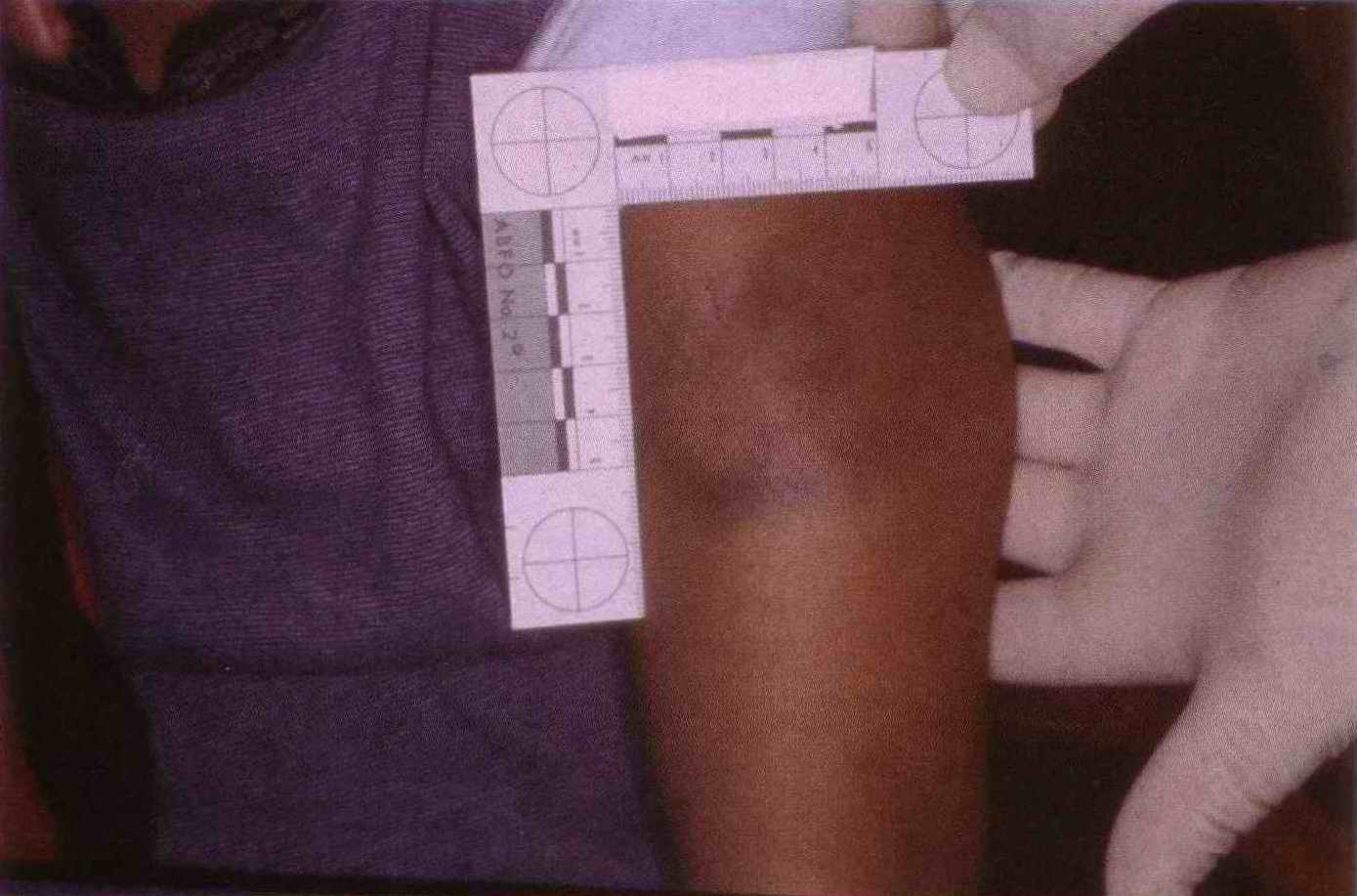
The types of human bitemarks can vary greatly; they can be offensive, defensive, self-inflicted, or consensual. The wound, regardless of type, can be classified as human or animal. Animal bites are discussed later in the text but human bites in skin can be classified based on severity.
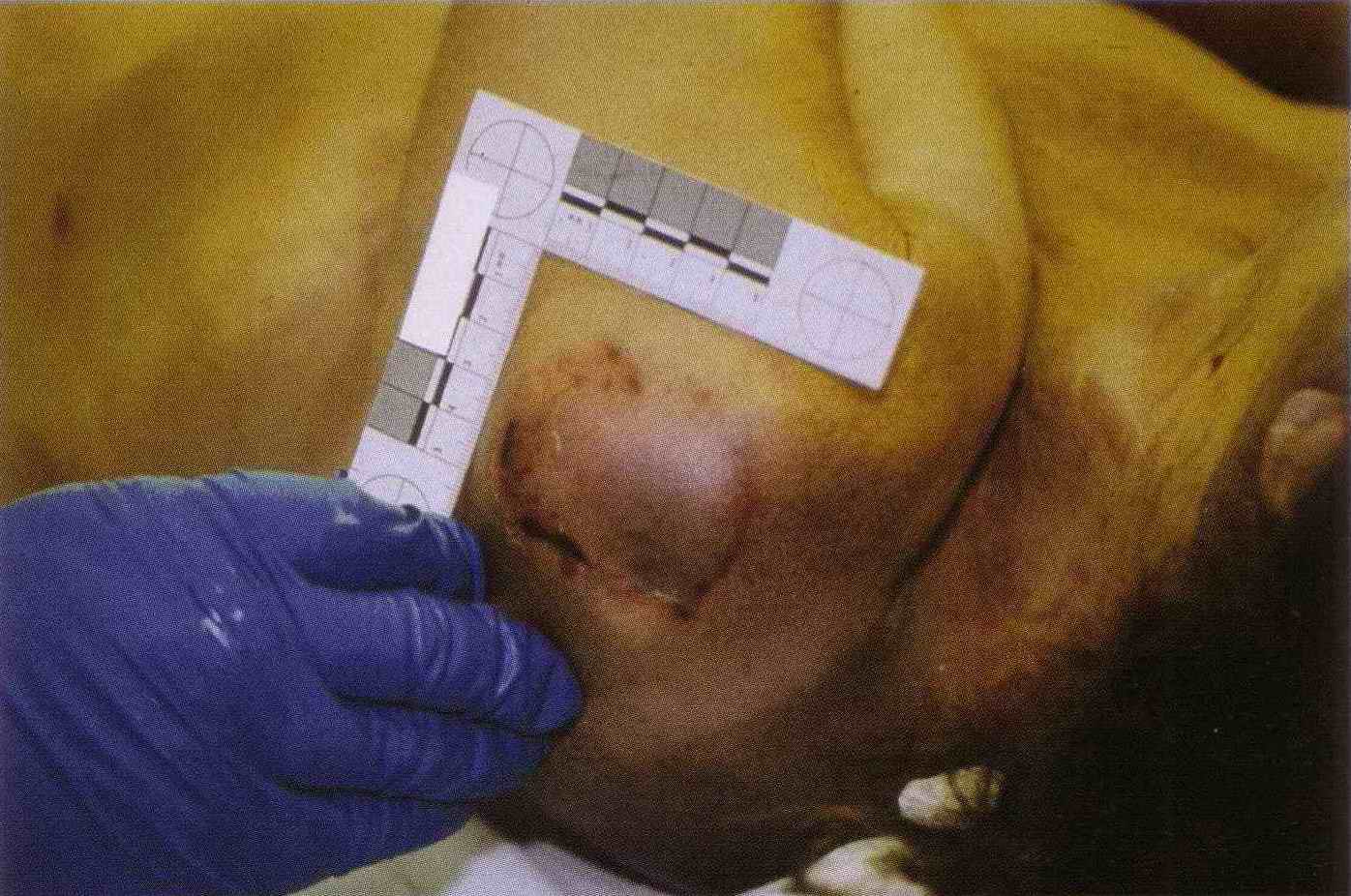
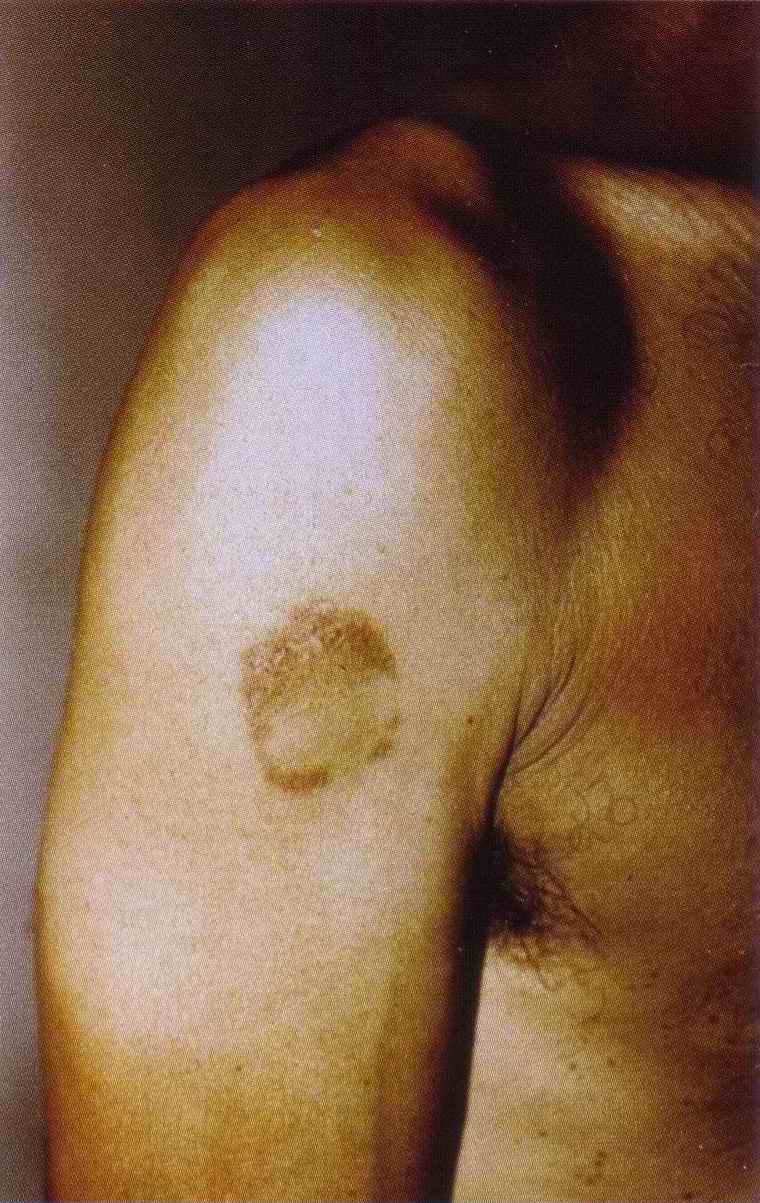
The pattern is diffuse. No individual tooth marks are identified. There may be one or both arches marking (Figure 13.8). It may appear as a diffuse bruised ring and may be of little or no evidentiary value for matching to a suspect (Figure 13.9a,b). The Class I bite may not even be identifiable as a human bitemark, only a round pattern injury. However, it may be of great value in other regards such as saliva, DNA, arch forms, and so on.
|
|
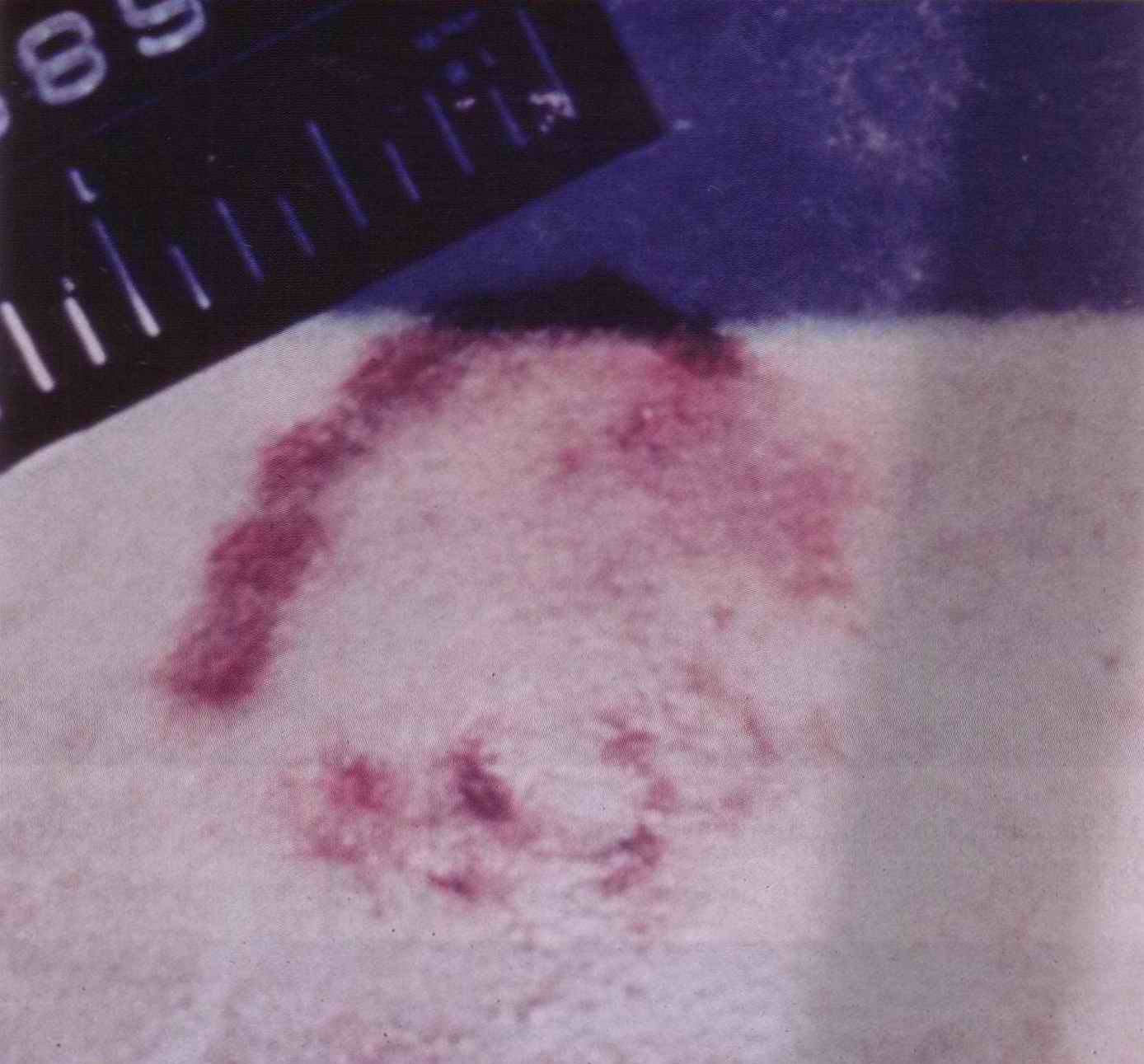
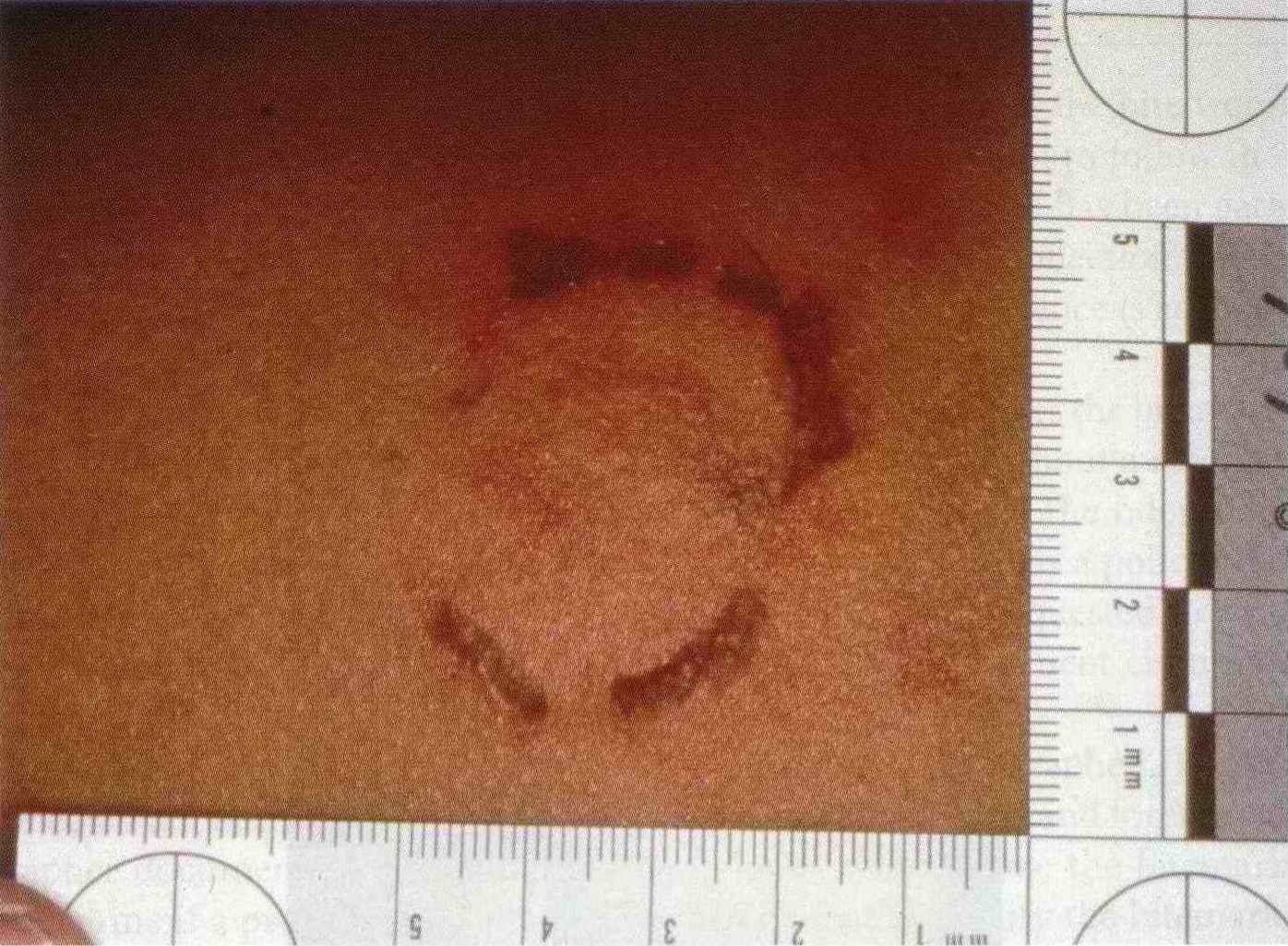
This bite wound has both class and some individual characteristics. The arches upper (maxillary) and lower (mandible) can be identified. Specific teeth maybe identified. A Class II bite may be used more for exclusion than for inclusion of a suspect (Figures 13.10 and 13.11).
|
|
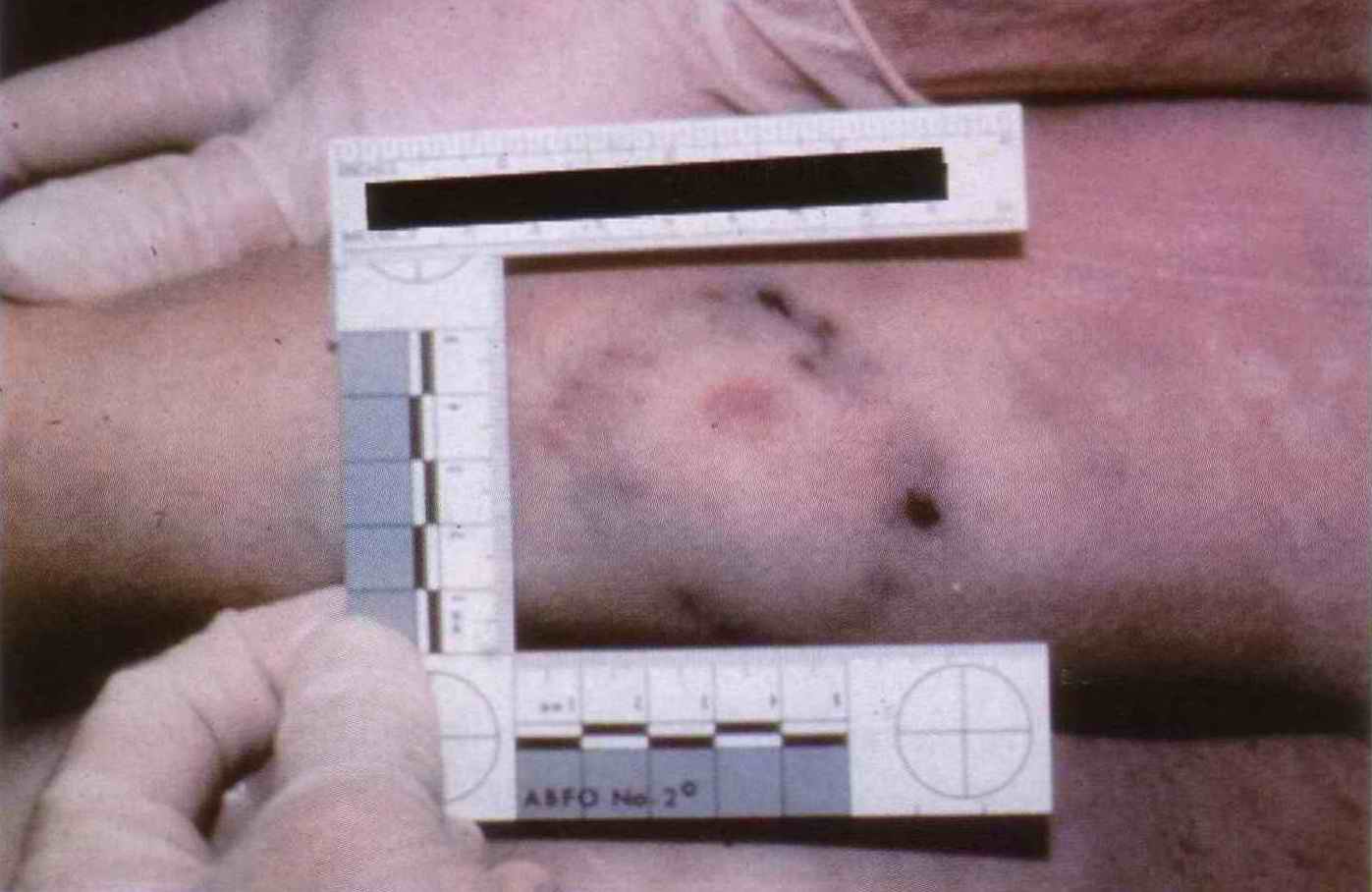
This bite will show excellent tooth morphology in at least one arch. Specific teeth shapes and their position in the dental arch can be identified. This class of bitemark can produce a dental profile of the biter as in the Bundy case and will be used for both inclusion as well as exclusion (Figure 13.12). The third dimension or indentations may be present and can help estimate the time the bite was inflicted in relation to the time of death (Figure 13.13).
|
|
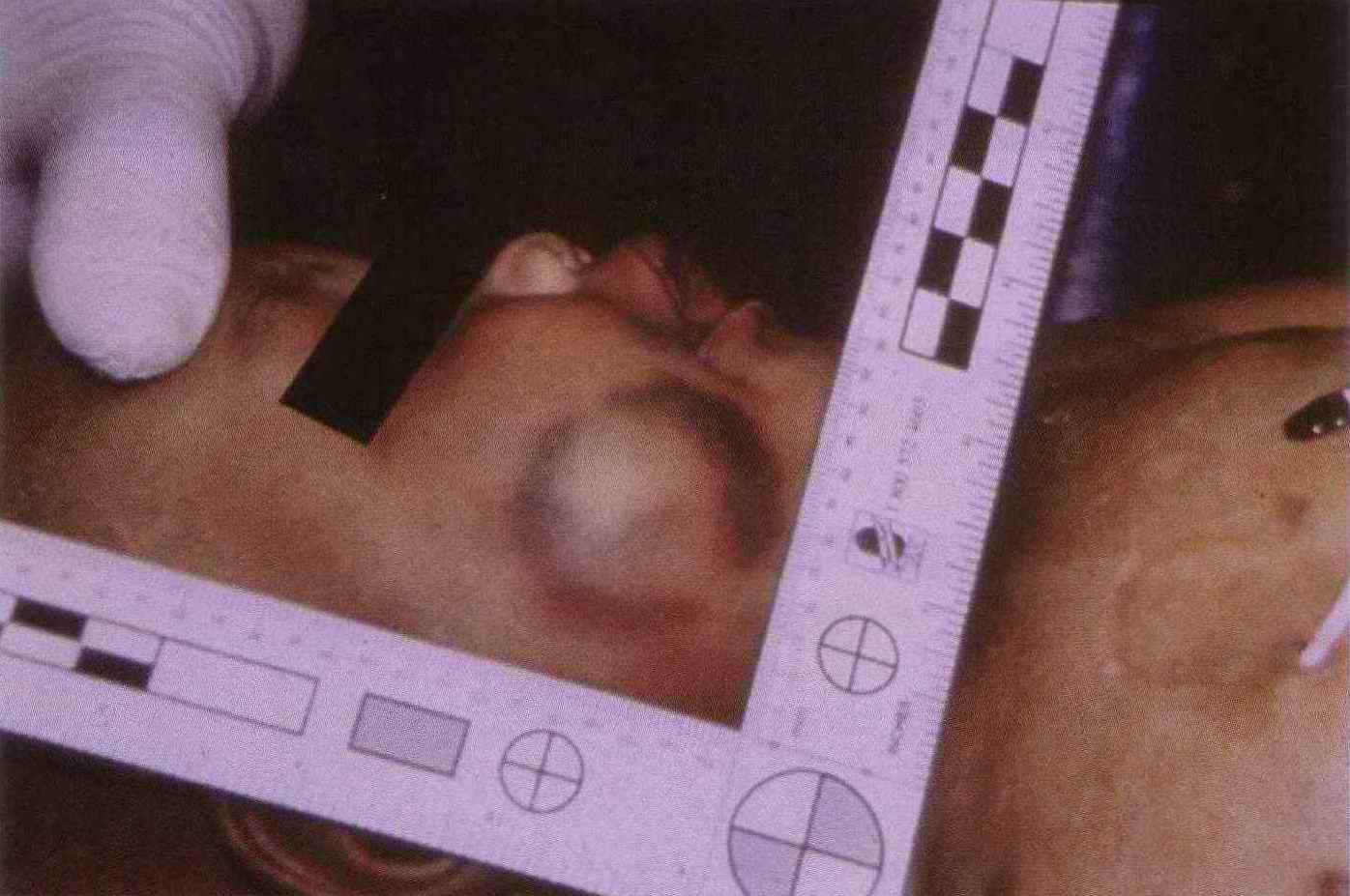
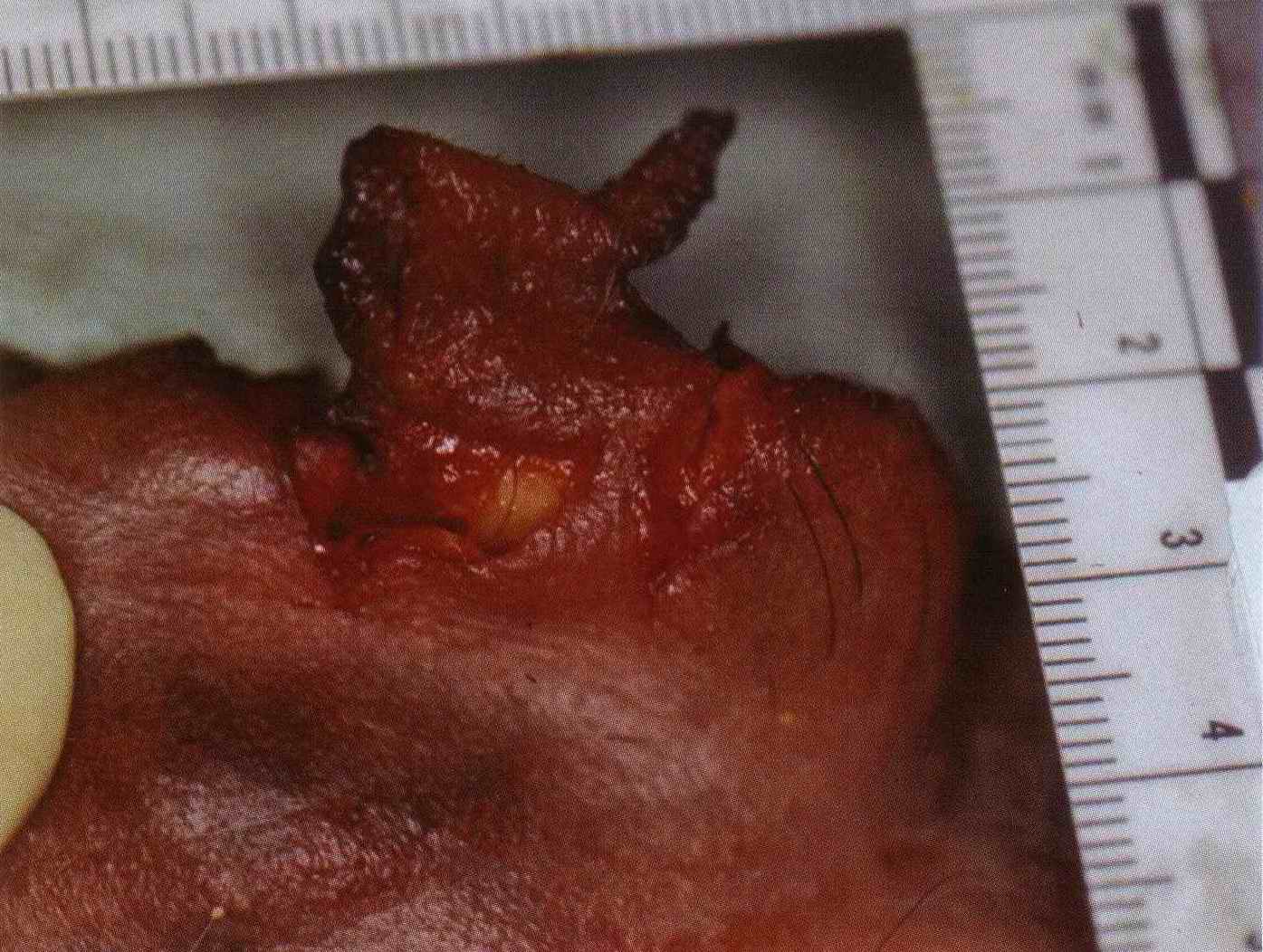
This bite will be an incision or possibly an excision of the tissue. Blood is present on the surface and DNA may be contaminated. This class of bite is difficult if not impossible to get a profile of the teeth that caused it. However, a Class IV bite will almost always produce a permanent injury or disfigurement (Figure 13.14): the loss of a finger or an ear (Figure 13.15), or a permanent scar.
|
|
The book gives a host of similar information on all aspects of forensic odontology. We are sure our readers would enjoy the book as much as we at the journal office did.
Review by -Puneet Setia and Avneesh Gupta
|
|
|
|
|
 Request a PDF file of this review by clicking here. (If your screen resolution can not be increased, or if printing this page is giving you problems like overlapping of graphics and/or tables etc, you can take a proper printout from a pdf file. You will need an Acrobat Reader though.)
 N.B. It is essential to read this journal - and especially this review as it contains several tables and high resolution graphics - under a screen resolution of 1600 x 1200 dpi or more. If the resolution is less than this, you may see broken or overlapping tables/graphics, graphics overlying text or other anomalies. It is strongly advised to switch over to this resolution to read this journal - and especially this review. These pages are viewed best in Netscape Navigator 4.7 and above.
-Anil Aggrawal
 [ Major links ]
[ Aims and Objectives ] [ FAQ ] [ Editorial Board ] [ Contributing Partners ] [ Sitemap ]
[ Paper/Thesis submission guidelines ] [ Editorials - Cumulative Index ] [ Discussion ] [ Chat room ] [ Be our sponsor! ]
[ Cumulative index of Book Reviews sorted by | Publishers | General Interest Books | Technical Books ] [ Animated Reviews ] [ Featured Reviews ] [ E-books ]
[ Reviews with Quizzes ] [ Links ] [ Submit books/journals/software/multimedia for review ] [ journal CD ] [ History of the Journal ] [ Interviews ] [ Credits ]
[ Cumulative index of | Theses/dissertations | [ Online Courses ] [ Awards ] [ Anil Aggrawal's Internet Journal of Book Reviews - Sister Publication ]
[ Cumulative reviews of Software/Multimedia | Books on CD/Audio tapes ] | Calenders | Models ] [ contact us ]
[ Undergraduate section | Postgraduate section ] [ Forensic gadgets/toys/other tidbits ]
Books for review must be submitted at the following address.
Professor Anil Aggrawal (Editor-in-Chief)
Anil Aggrawal's Internet Journal of Forensic Medicine and Toxicology
S-299 Greater Kailash-1
New Delhi-110048
India
Click here to contact us.
This page has been constructed and maintained by Dr. Anil Aggrawal, Professor of Forensic Medicine, at the Maulana Azad Medical College, New Delhi-110002. You may want to give me the feedback to make this pages better. Please be kind enough to write your comments in the guestbook maintained above. These comments would help me make these pages better.
 IMPORTANT NOTE: ALL PAPERS APPEARING IN THIS ONLINE JOURNAL ARE COPYRIGHTED BY "ANIL AGGRAWAL'S INTERNET JOURNAL OF FORENSIC MEDICINE AND TOXICOLOGY" AND MAY NOT BE REPOSTED, REPRINTED OR OTHERWISE USED IN ANY MANNER WITHOUT THE WRITTEN PERMISSION OF THE WEBMASTER
Questions or suggestions ? Please use ICQ 19727771 or email to dr_anil@hotmail.com
Page Professor Anil Aggrawal via ICQ

|

 ...This is perhaps the first book which gives information on the forensic examination of dental structure in such great detail... and with so many illustrative photographs... A must for all medical examiners, investigators, dental specialists, forensic odontologists, lawyers, and expert witnesses...