|
 OTHER REVIEWS IN THIS ISSUE OTHER REVIEWS IN THIS ISSUE Pages: |1|
2|
3|
4|
5|
6|
7|
8|
9|
10|
11| Pages: |1|
2|
3|
4|
5|
6|
7|
8|
9|
10|
11|
[Popular Books Section]
[Books on CD/Audio tapes]
|



|
FIRST CLASS JOB
|
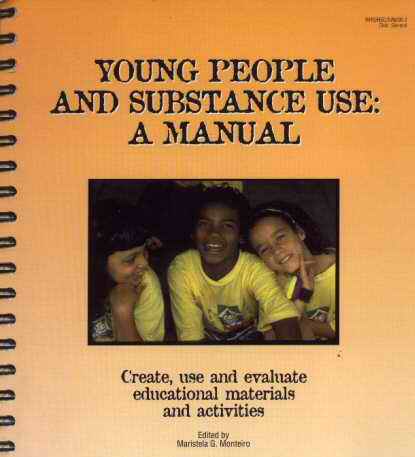
 Young People and Substance Use: A Manual - Create, use and evaluate educational materials and activities, (Document produced by the WHO Division of Substance Abuse)
World Health Organization, Avenue Appia 20, 1211 Geneva 27, Switzerland, Publication Date 1999, 162 pages, ISBN not mentioned, Order Number 1930151, Price: CHF 30.00 / US $ 27.00 - In developing countries: CHF 21.00
 More information on this book is available in WHO's Internet catalogue which is accessible by clicking here
|
At first glance I thought that this manual was about young people and substance abuse. Having looked closer I find that it is not! It is certainly about the efforts to reduce substance abuse and associated health and social problems amongst young people but the title of the manual mislead me a little.
That said I believe this manual will appeal to all educators of young people. The various groups of these people will immediately latch on to its modern and imaginative form. The discussions of 'substances' and the recognition of the need for educational materials and/or activities are to be welcomed in this world of ours where are young people are at such tremendous risk from such abuses.
This manual has a simple cartoon style and format, which states how to use it and its learning outcomes. This couldn't be clearer or simpler.
Chapter 2 explores the details and problems of working in a group. It outlines the various methods of getting through to people in groups. These include role-playing or storytelling based upon true stories. A strong point that is highlighted here is that in the wrong hands these techniques can be manipulative. Objectives are detailed before going on to explain the role of the facilitator. This section clarifies the points that facilitators should NOT do.
Warm-up activities explain in simple detail how to relax everyone and to create the right kind of atmosphere, which will be more conducive to the actual learning process. This also prepares those involved for working together. This is something we all know about in theory at least, but is often difficult to achieve.
Excellent tips are provided on how to introduce a discussion. Sensible, no-nonsense 'group problems' are explained along with ideas that can be utilised to defuse sensitive or difficult situations.
Chapter 3 is headed 'Creative Workshop Basics' and that is exactly what it puts over to the reader. More tips are provided that help to develop the message. A step-by-step system guides the reader through the problems of 'organizing'. It almost takes us by the hand, giving examples such as groups discussing actual cases which I have to say, would not be easy to approach without help and guidance. Assistance is provided on the design of the materials that are likely to be required and how to produce them. Lots of different ways are suggested but I was surprised at the lack of the use of information technology. It might well be argued that the use of such equipment might not be considered appropriate for certain topics and at least it illustrates that you do not need all the 'bells and whistles' to put over the message.
 ...A strong point that is highlighted here is that in
the wrong hands these techniques can be manipulative. Objectives are detailed before
going on to explain the role of the facilitator. This section clarifies the points that
facilitators should NOT do.
Warm-up activities explain in simple detail how to relax everyone and to create the
right kind of atmosphere, which will be more conducive to the actual learning process.
This also prepares those involved for working together. This is something we all know
about in theory at least, but is often difficult to achieve.
...
...A strong point that is highlighted here is that in
the wrong hands these techniques can be manipulative. Objectives are detailed before
going on to explain the role of the facilitator. This section clarifies the points that
facilitators should NOT do.
Warm-up activities explain in simple detail how to relax everyone and to create the
right kind of atmosphere, which will be more conducive to the actual learning process.
This also prepares those involved for working together. This is something we all know
about in theory at least, but is often difficult to achieve.
...

|
The 'Stories' section is superb. Everything is considered, even the location of the learning environment! How to use advertising is discussed and suggests ways of modifying these advertisements to use to the educators advantage. This lends itself well to combating the difficulties of alcohol and cigarette advertising, as these are usually slick and professional as well as highly funded. The use of collage, posters, photographs, comics, audiovisual materials and slides are discussed. Once again though, there is no mention of information technology systems such as Microsoft's PowerPoint etc.
A powerful chapter on dramatic productions explains all the advantages of this very influential technique. Other methods are explored including roll-play and drama, including street and/or staged theatre, circus, puppetry, drawing and painting, street TV, radio programmes and games. This leaves me with the view that there cannot be many more comprehensive checklists than this one!
All this advise would be flawed if there was not a way of testing what had been achieved and indeed if it has been successful. Chapter 6 covers this process and achieves this well. This can often be a little on the dull side and it seems to me that the authors have taken this into account.
Chapter 7 explores 'Mentoring' which is greatly enhanced by using examples and includes their evaluation. A 'Clear Knowledge' questionnaire is provided, which I think is so good that it can be adapted to suit many situations and requirements. How to evaluate feedback back from participants is explained along with some unexpected effects. Chapters on 'Disseminating Materials and Activities' along with 'Mobilizing Resources' adds a quality to the closing part of this manual, as does the obligatory bibliography and further reading chapter. Pointing the way forward in this difficult and complex subject area will be most welcome by professionals and amateur providers alike.
The readers own evaluation is sought at the end of the manual, which to me is always an indication of the quality of the providers work. They care what we think! Lots of excellent points are raised in the final annexes. This includes a glossary of terms, which I found very useful and clear.
My conclusion? The authors have done a first class job in producing this manual. A 'must' for all those who's job and role includes influencing young people positively and helping them to improve their lives.
-John Williamson
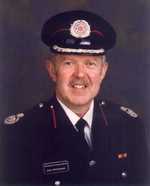 |
-John Williamson John Williamson joined Lancashire Fire and Rescue Service in 1967 and served throughout Lancashire. His special interest is in fatal fire investigation. He is a member of Strathclyde's Technical Support Team. Williamson's interests include Fire Investigation, Technical Fire Safety, Community Fire Safety, Health & Safety, Litigation, Crime & Disorder liaison. His hobbies include Music, (listening & playing) swimming and motorcycling. He is an avid reader and reviewer of books on a wide variety of subjects. Several of his erudite pieces have been published in our sister journal. He can be contacted at Johnnywilliamson@btinternet.com. |
Order this book by clicking here
or via telephone: (41 22) 791 24 76, or Facsimile (fax): (41 22) 791 48 57
or via the website www.who.int/dsa
or via mail at this address: WHO, Marketing and Dissemination, 1211 Geneva 27, Switzerland

 Request a PDF file of this review by clicking here. (If your screen resolution can not be increased, or if printing this page is giving you problems like overlapping of graphics and/or tables etc, you can take a proper printout from a pdf file. You will need an Acrobat Reader though. You can also create a pdf file yourself by clicking here.)


N.B. It is essential to read this journal - and especially this review as it contains several tables and high resolution graphics - under a screen resolution of 1600 x 1200 dpi or more. If the resolution is less than this, you may see broken or overlapping tables/graphics, graphics overlying text or other anomalies. It is strongly advised to switch over to this resolution to read this journal - and especially this review. These pages are viewed best in Netscape Navigator 4.7 and above.
-Anil Aggrawal
 [ Major links ]
[ Aims and Objectives ] [ FAQ ] [ Editorial Board ] [ Contributing Partners ] [ Sitemap ]
[ Paper/Thesis submission guidelines ] [ Editorials - Cumulative Index ] [ Be our sponsor! ]
[ Cumulative index of Book Reviews sorted by | Publishers | General Interest Books | Technical Books ] [ Animated Reviews ] [ Featured Reviews ]
[ Reviews with Quizzes ] [ Links ] [ Submit books/journals/software/multimedia for review ] [ journal CD ] [ History of the Journal ] [ Interviews ] [ Credits ]
[ Cumulative index of | Theses/dissertations | Online Courses | Awards ] [ Anil Aggrawal's Internet Journal of Book Reviews - Sister Publication ]
[ Cumulative reviews of Software/Multimedia | Books on CD/Audio tapes | Calenders | Models ] [ contact us ]
Books for review must be submitted at the following address.
Professor Anil Aggrawal (Editor-in-Chief)
Anil Aggrawal's Internet Journal of Forensic Medicine and Toxicology
S-299 Greater Kailash-1
New Delhi-110048
India
Click here to contact us.
This page has been constructed and maintained by Dr. Anil Aggrawal, Professor of Forensic Medicine, at the Maulana Azad Medical College, New Delhi-110002. You may want to give me the feedback to make this pages better. Please be kind enough to write your comments in the guestbook maintained above. These comments would help me make these pages better.
 IMPORTANT NOTE: ALL PAPERS APPEARING IN THIS ONLINE JOURNAL ARE COPYRIGHTED BY "ANIL AGGRAWAL'S INTERNET JOURNAL OF FORENSIC MEDICINE AND TOXICOLOGY" AND MAY NOT BE REPOSTED, REPRINTED OR OTHERWISE USED IN ANY MANNER WITHOUT THE WRITTEN PERMISSION OF THE WEBMASTER
Questions or suggestions ? Please use ICQ 19727771 or email to dr_anil@hotmail.com
Page Professor Anil Aggrawal via ICQ

|