|



|
|
|
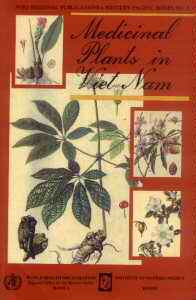
 Medicinal Plants in Vietnam (WHO Regional Publications - Western Pacific Series No 3) , Paperback, 5.5" x 8.5".
World Health Organization Regional Office for the Western Pacific, Manila, Publication Date 1990, i - xxix and 410 pages, ISBN 92 9061 101 4: Price: Sw.fr. 45.00
Medicinal Plants in the Republic of Korea - Information on 150 commonly used medicinal plants (WHO Regional Publications - Western Pacific Series No 21) Compiled by Natural Products Research Institute, Seoul National University, Paperback, 5.5" x 8.5".
World Health Organization Regional Office for the Western Pacific, Manila, Publication Date 1998, i - ix and 316 pages, ISBN 92 9061 120 0: Price: Sw.fr. 42.- Price for Developing Countries : Sw.fr. 29.40
 WHO's Catalogue of Publications
 |
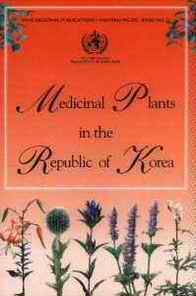 |
Both these books are from the World Health Organisation's Western Pacific Series and since they cover roughly similar geographic areas are ideally reviewed together. Furthermore both books have a similar format and style. Both discuss medicinal plants of that country in an alphabetical order using the botanical names. Each plant is given one page of text and one page of illustrations. In the case of Korea the illustrations consist of colour photographs whereas for Vietnam these consist of full-page colour drawings.
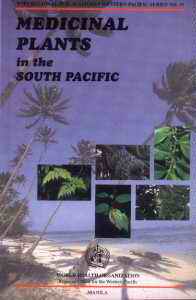
The WHO regional office for the Western Pacific is one of six regional offices throughout the world, each with its own programme geared to the particular health problems of the countries or areas it serves. Publications are in English and in French. Other books in this series are Medicinal Plants in China and Medicinal Plants in the South Pacific.
In spite of advances in technology and advances in Western medicine herbal remedies have not gone away. Indeed they are making a comeback in a big way. Take for instance Korean ginseng and Gingko biloba. Both these herbal products are household names in the West. Highly refined extracts of medicinal plants are easily available in the Western world often on mail order.
The original version of this book was published in Vietnamese and was prepared under the guidance of Professor Nguyen Van Dan, Vice-Minister of Health of Vietnam and Professor Doan Thi Nhu both former directors of the Institute of Materia Medica.
As the authors' note informs us nature has blessed Vietnam with a great variety of medicinal plants. This reviewer was privileged to see some of these plants on sale at markets in Ho Chi Minh City and in Hanoi during a visit to Vietnam. Surveys have revealed 1863 species of medicinal plants in Vietnam. The book presents 200 medicinal plants ranging from Abrus precatorius to Zizyphus mauritiana.
The aim of the publication is to help the reader identify medicinal plants easily and thereby pass information to those interested in their collection and use. With the translation of the book into English the authors hope that there will be exchange of information on the use of medicinal plants between Vietnam and other parts of the world particularly those countries where the same plants can be found.
The book is in three parts. Part one gives a general introduction to the multidisciplinary research that has been undertaken on medicinal plants. This is a short section running into ten pages. Part two is the main part and presents common and valuable species of wild and cultivated medicinal plants in alphabetical order of their botanical names. Part three is an index which gives the botanical names as well as the common English and Vietnamese names.
 |
 |
The first part covers topics such as acclimatisation and cultivation of medicinal plants, drug development from plants, utilisation, drying, processing and storage of medicinal plants. The scale of the research is staggering. One thousand eight hundred and sixty three (1863) plant species in 238 families have been identified and nearly 8000 specimens of 1296 species have been collected. Over 1000 species have been listed in an index giving the flowering period of each species. A list of about 1000 folk remedy prescriptions has also been compiled.
Vietnam is blessed with a long coastline, mighty rivers such as the Mekong and mountainous regions. Three quarters of the area of Vietnam is mountainous or forest covered. The 2500Km of coastline yield nearly 300 species of seaweed. As the book informs us indigenous drugs are available everywhere - in the sea, in the forests or in the immediate vicinity of dwellings. Furthermore 260 foreign species have been introduced to enrich the medicinal plant resources of the country.
The plants described in part two forms a formidable list. Some of the species are easily identified from their botanical names. Even those living in the Western world would recognise Allium, Citrus, Datura, Nerium, Papaver, Solanum and Strychnos. I do not propose to discuss every plant in this book but the following are my favourites having known them from my childhood in the tropics.
Abrus precatorius is a leguminous plant known as Jequirity in English. It is known for its distinct red and black seeds usually made into necklaces in the tropics. The seeds are highly toxic but in Vietnam the roots, stems and leaves are used in the treatment of various ailments from coryza to viral hepatitis. The seeds are used externally as a poultice on boils.
Areca catechu is the so-called Betel-nut palms (Areca nut) the seeds of which are chewed with "Betel" (Piper betle) leaves and contain arecoline. Arecoline is mildly hallucinogenic.
 Plants in Western Medicine Plants in Western Medicine
The following plants feature/have featured in Western medicine at one time or the other:
|
Centella asiatica tastes like parsley and is used as a salad leaf in the reviewer's native country of Sri Lanka. It is known as "Gotukola" in the Sinhalese language and under this name it is used in Britain as an herbal remedy.
Nelumbo nucifera is the sacred lotus, which is associated with Buddha and produces beautiful flowers. The seeds are considered to have medicinal properties.
Piper betle is a very familiar plant in Asia and is responsible for the red stains on pavements! Betel leaves are chewed with areca nut and the resulting red juice is spat out usually without due regard for others. Betel chewing is responsible for the high incidence of oral cancer in this part of the world.
Piper nigrum is the familiar black pepper and Punica granatum is the pomegranate.
Ricinus communis is the well-known castor oil plant, which is in the news these days because of the suspected use of ricin by terrorists. The seed oil is the familiar laxative castor oil. Ricin is found in the seed residue.
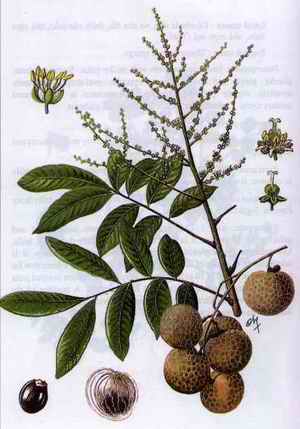
Other plants of interest to westerners include Rauwolfia cambodiana or the Cambodian rauwulfia, which is of course a relative of the common Rauwolfia serpentina from which the anti-hypertensive drug Reserpine was derived. The plant grows wild in Vietnam and is endemic in the mountains of the southern region. The root bark is used in the treatment of hypertension and psychoses.
 |
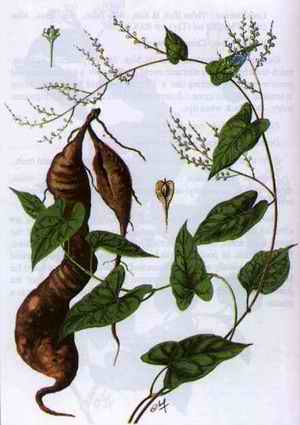 |
There is of course Thevetia peruviana or the yellow oleander, a common plant in the tropics, which yields the cardiotonic glycoside thevetin. Thevetin is extracted from the seeds.
An unusual inclusion is Zea mays or Maize. Apparently maize "silk" (styles with stigmas) is used as a diuretic in heart disease.
The book measures 14 x 21.5 cms and has been printed in Hanoi. The paper is of good quality and coated but the typeface shows signs of ageing. This is however a minor criticism.
According to the introduction to this book there are over one thousand species of medicinal plants that have been used traditionally in Korea and traditional Oriental medicine is still practised throughout the country. Korean pharmacology is thought to have originated from old traditional pharmacology and is therefore many centuries old.
This book describes 150 species of medicinal plants commonly used in Korea. The book originates from Seoul and therefore represents the Republic of Korea.
The plants are listed in alphabetical order using the botanical names. The format for describing each plant is first the botanical name followed by the Korean name and the English name. The parts of the plant used are then listed followed by a list of traditional uses. There then follows a description of the plant in botanical terms, its habitat, distribution, bioactivities, chemical components and finally a list of references.
The information regarding the traditional uses is taken solely from the traditional medicinal literature and their effectiveness has not been established by modern scientific means.
A useful index is included which gives not only the botanical names but also English and Korean names.
Again the plants described form a formidable list. Surprisingly, there is very little overlap with the Vietnamese plants especially since Vietnamese culture is largely influenced by Chinese traditions.
As before I have selected plants that I have some familiarity with.
Aconitum koreanum should be familiar to most as it contains the alkaloid aconitine, which is an analgesic. The plant is traditionally used for chills and articular pains.
Agastache rugosa is a perennial herb and belongs to the family of herbs known as hyssop. It is traditionally used in Korea for the treatment of acute gastritis, vomiting and diarrhoea.
Albizia julibrissin is a mimosa and is used for the treatment of neuralgia and headaches.
Chaenomeles sinensis is Chinese quince and is cultivated for its fruit. The fruit is used for the treatment of asthma, common cold and as a protective agent against liver disease.
 |
 |
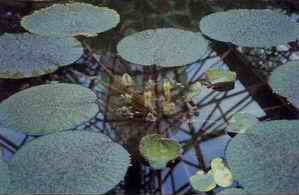
Ginkgo biloba is well known even in the Western world where in recent times it has enjoyed an unprecedented popularity amongst herbalists.
Glycine max is the familiar Soya bean traditionally used for furuncles, lumbar vertebral pain and as an expectorant. Interestingly the sprouts show oestrogen like activity.
Paeonia suffruticosa is a member of the Peony family, which is an ornamental plant in the Europe. The root bark is considered to have medicinal properties.
Panax ginseng or Korean ginseng is also well known in the West.
Viscum album was a surprise entry for the reviewer as this is the familiar mistletoe. Mistletoe is a parasitic plant and is associated with Christmas. In Korea the leaf and the stem are apparently used as an antihypertensive agent as well as for the treatment of stomach cancer. The bioactivity data does include a hypotensive action.
 |
 |
Other plants of interest include Dryopteris crassirhizoma or Crown-wood fern, which is traditionally used as a parasiticide against tapeworm and hookworm. Older readers might remember the use of Dryopteris felix-mas as a treatment for tapeworm in western medicine many years ago.
A species of Hibiscus, Hibiscus syriacus is mentioned as a cure for dysentery and abdominal pain. The active part of the plant is the bark.
Ipomea nil a type of Morning Glory is recommended as a laxative and a contraceptive the active part being the seed.
There are many more interesting plants.
An index giving cross-references between botanical names English names and Korean names is included.
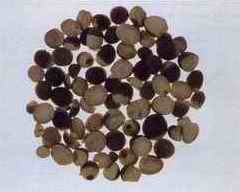
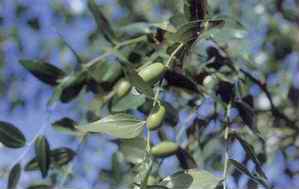
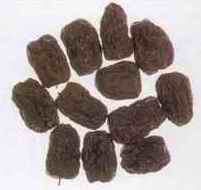
The photographs, which are all in colour, are excellent and have been reproduced well. The pictures were taken between 1994 and 1996 in various regions of Korea under natural conditions during the flowering or fruiting season. This makes it easy to identify the plants. In some of the pictures it is difficult to work out the size of the seeds and a scale would have been helpful. The book measures 14 x 21.5 cms. There is no mention of the printer but the print quality is good. The paper is of good quality and coated.
Both books carry a warning that some plants are extremely poisonous and the books are meant for educational and reference purposes. Self-treatment is not recommended and could be dangerous.
Who would benefit from these books? Apart from botanists and naturalists I would think that these books would be of use to practitioners of herbal medicine, pharmacologists of the traditional as well as the modern kind, pharmaceutical developers and pharmaceutical companies. These are a few I can think of. Eco-tourists travelling to this part of the world would also benefit from these books.
 |
-Gyan Fernando Dr Gyan C. A. Fernando is a native of Sri Lanka and is familiar with plants used in Ayurvedic remedies. He now works as a Forensic Pathologist in Devon, England. |
Order this book by clicking here
or via telephone: (41 22) 791 24 76, or Facsimile (fax): (41 22) 791 48 57
or via the website http://bookorders.who.int
or via mail at this address: WHO, Marketing and Dissemination, 1211 Geneva 27, Switzerland

 Request a PDF file of this review by clicking here. (If your screen resolution can not be increased, or if printing this page is giving you problems like overlapping of graphics and/or tables etc, you can take a proper printout from a pdf file. You will need an Acrobat Reader though.)
N.B. WHO publications can be purchased in Rupees, at a very low price, through WHO's Regional Office in New Delhi at the following address:
World Health Organization
Regional Office for South-East Asia
World Health House
Indraprastha Estate
Mahatma Gandhi Road
NEW DELHI 110002
Contact : Mr Dixit, RDOC/Sales
email : dixitr@whosea.org
N.B. It is essential to read this journal - and especially this review as it contains several tables and high resolution graphics - under a screen resolution of 1600 x 1200 dpi or more. If the resolution is less than this, you may see broken or overlapping tables/graphics, graphics overlying text or other anomalies. It is strongly advised to switch over to this resolution to read this journal - and especially this review. These pages are viewed best in Netscape Navigator 4.7 and above.
-Anil Aggrawal
Reviews by Gyan Fernando of these books [ China ]
[ South Pacific ]
Reviews by V.V.Pillay of India[ China, Vietnam, Korea and South Pacific Medicinal Plants ]
[ Major links ]
[ Aims and Objectives ] [ FAQ ] [ Editorial Board ] [ Contributing Partners ] [ Sitemap ]
[ Paper/Thesis submission guidelines ] [ Editorials - Cumulative Index ] [ Be our sponsor! ]
[ Cumulative index of Book Reviews sorted by | Publishers | General Interest Books | Technical Books ] [ Animated Reviews ] [ Featured Reviews ]
[ Reviews with Quizzes ] [ Links ] [ Submit books/journals/software/multimedia for review ] [ journal CD ] [ History of the Journal ] [ Interviews ] [ Credits ]
[ Cumulative index of | Theses/dissertations | Online Courses | Awards ] [ Anil Aggrawal's Internet Journal of Book Reviews - Sister Publication ]
[ Cumulative reviews of Software/Multimedia | Books on CD/Audio tapes | Calenders | Models ] [ contact us ]
Books for review must be submitted at the following address.
Professor Anil Aggrawal (Editor-in-Chief)
Anil Aggrawal's Internet Journal of Forensic Medicine and Toxicology
S-299 Greater Kailash-1
New Delhi-110048
India
Click here to contact us.
This page has been constructed and maintained by Dr. Anil Aggrawal, Professor of Forensic Medicine, at the Maulana Azad Medical College, New Delhi-110002. You may want to give me the feedback to make this pages better. Please be kind enough to write your comments in the guestbook maintained above. These comments would help me make these pages better.
 IMPORTANT NOTE: ALL PAPERS APPEARING IN THIS ONLINE JOURNAL ARE COPYRIGHTED BY "ANIL AGGRAWAL'S INTERNET JOURNAL OF FORENSIC MEDICINE AND TOXICOLOGY" AND MAY NOT BE REPOSTED, REPRINTED OR OTHERWISE USED IN ANY MANNER WITHOUT THE WRITTEN PERMISSION OF THE WEBMASTER
Questions or suggestions ? Please use ICQ 19727771 or email to dr_anil@hotmail.com
Page Professor Anil Aggrawal via ICQ

|