|



|
|
|
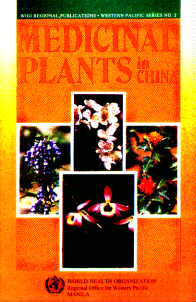
 Medicinal Plants in China - A selection of 150 commonly used species, Compiled by The Institute of Chinese Material Medica, China Academy of Traditional Chinese Medicine, Paperback, 5.5" x 8.5".
World Health Organization Regional Office for the Western Pacific, Manila, Publication Date 1998 (2nd impression 1997), i- xv and 331 pages, ISBN 92-9061-102-2: Price: Sw.fr. 50.00
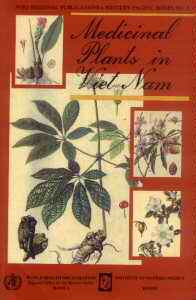
Medicinal Plants in Vietnam (WHO Regional Publications - Western Pacific Series No 3) , Paperback, 5.5" x 8.5".
World Health Organization Regional Office for the Western Pacific, Manila, Publication Date 1990, i - xxix and 410 pages, ISBN 92 9061 101 4: Price: Sw.fr. 45.00
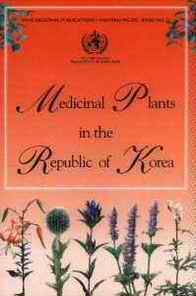
Medicinal Plants in the Republic of Korea - Information on 150 commonly used medicinal plants (WHO Regional Publications - Western Pacific Series No 21) Compiled by Natural Products Research Institute, Seoul National University, Paperback, 5.5" x 8.5".
World Health Organization Regional Office for the Western Pacific, Manila, Publication Date 1998, i - ix and 316 pages, ISBN 92 9061 120 0: Price: Sw.fr. 42.- Price for Developing Countries : Sw.fr. 29.40
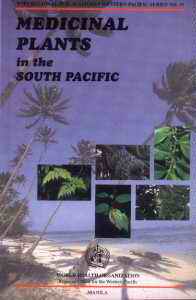
Medicinal Plants in the South Pacific - Information on 102 commonly used medicinal plants in the South Pacific (WHO Regional Publications-Western Pacific Series No 19) , Paperback, 5.5" x 8.5".
World Health Organization Regional Office for the Western Pacific, Manila, Publication Date 1998, i-xvii and 254, ISBN 92-9061-119-7: Price: Sw.fr. 33.- Price for Developing Countries : Sw.fr. 23.10
 WHO's Catalogue of Publications
 |
 |
 |
 |
The World Health Organization is a specialized agency of the United Nations, which is primarily concerned with international health matters and public health. This organization created in 1948, motivates health professionals from more than 160 countries to exchange their knowledge and expertise, with the aim of raising the quality of health of all citizens to a level that will permit them to lead a socially and economically fulfilling life. The WHO has 6 regional offices throughout the world, each with its own programme geared to the particular health problems of the country or area it serves. The South East Asia Regional Office is located in New Delhi. However, the series of books under review come under the ambit of the Regional Office of the Western Pacific, which is located in Manila.
In 1985, the WHO Regional Office of the Western Pacific began the task of publishing detailed information on medicinal plants of the prominent countries of the region, in an effort to harness the rich natural resources of these countries efficaciously for healthcare. Herbal medicine constitutes one of the most important resources, which can be mobilized for improving the health status of people all over the world. Most countries have their own respective systems of indigenous medicine. For example, India has an ancient system, Ayurveda that is now being recognized globally as a very effective branch of alternative medicine. Similarly the countries represented by the books under review, namely, China, Vietnam, South Korea, and nations of the South Pacific also possess vast knowledge of locally available medicinal herbs that have been used by their people from ancient times. The medicinal uses of many of these plants have withstood the test of time, and their efficacy and relative safety have been established by means of modern scientific tests. Some of these plants are in fact found in several other parts of the world, and therefore, knowledge about them could be usefully transferred.
 |
 ...Of the thousands of medicinal plants existing in the countries covered by the Regional Office for the Western Pacific region, a few hundred of the most commonly used have been selected, photographed, and documented. The purpose is to help the reader recognize these useful plants and utilize their medicinal properties... ...Of the thousands of medicinal plants existing in the countries covered by the Regional Office for the Western Pacific region, a few hundred of the most commonly used have been selected, photographed, and documented. The purpose is to help the reader recognize these useful plants and utilize their medicinal properties...
|
Of the thousands of medicinal plants existing in the countries covered by the Regional Office for the Western Pacific region, a few hundred of the most commonly used have been selected, photographed, and documented. The purpose is to help the reader recognize these useful plants and utilize their medicinal properties. Except for the book on medicinal plants in Vietnam, all the other three have vivid photographs taken under natural conditions, with the focus on distinctive identifying features. The pictures appear to have been taken during flowering or fruiting season to facilitate easier identification on the basis of flowers or fruits. The books on Chinese and Korean plants bear two photographs on every alternate page, one below the other, with the upper picture revealing the entire plant or a large part of it, while the lower photograph concentrates on the details of the most useful part of the plant. All photographs are in colour. The pages facing the photographs bear concise and precise information on identifying characteristics and medicinal uses. The matter presented is authentic, being the product of eminent experts in the field, and the book on Korean plants even has references at the bottom of each page.
While the book on Vietnamese plants does not have photographs, the colour drawings have been done so exquisitely that they are virtually life-like. All the books refer to the respective plants contained in each by their botanical names, as well as mention the common English and local names. While the pharmacological properties have been well documented for the most part, the terminology used at times is a little quaint and perplexing. For instance, this reviewer was stumped by terms such as "stomatics," "omalgia," "dermatopathia," and "oppilation." Some of the therapeutic indications are very vague, for instance, "women's diseases," "gastrointestinal disorders," and "blood circulation disorders." A few are downright confusing, for instance, "cold knee," liver protection," "tonic earache," etc. And pray, how can a medicinal plant product cure hernia?
...In conclusion... these books represent an extremely important step taken in
highlighting the value of traditional medicine, and bringing it within the ambit of modern therapeutics. They should be considered as
essential addition to the library of every department of pharmacology and toxicology...
|
But these are minor flaws. One cannot take away the importance and relevance of such a work as represented by these beautifully produced, compact books. Only one hopes that the next time around, obsolete terminology would be replaced by a more contemporary approach. Perhaps, a pharmacologist's help could be sought for clarifying some of the therapeutic uses of these plants, and while his role should necessarily be of a secondary nature, he could still provide some useful inputs.
Since this reviewer is basically a toxicologist, it is but inevitable that the almost complete lack of information on adverse and toxic effects on these plants has to be pointed out. While it may be true that herbal medicines are relatively non-toxic as compared to chemically synthesized medicines, it would be presumptuous to suggest that they are totally free of toxicity. Even the (arguably) most popular herbal tonic the world has ever seen, the ginseng root, is today associated with clear-cut long-term toxicity in the form of the "ginseng abuse syndrome." The pharmacology and toxicology of medicinal products are so inextricably linked that one just cannot focus on either aspect in isolation. To make discussion more meaningful and more completely rounded, both aspects must be dealt with.
In conclusion, while there may be scope for improvement as mentioned, these books represent an extremely important step taken in highlighting the value of traditional medicine, and bringing it within the ambit of modern therapeutics. They should be considered as essential addition to the library of every department of pharmacology and toxicology. One final question: When will the WHO come out with a similar book on medicinal plants of India? This reviewer most eagerly awaits the answer to that.
|
-V.V.Pillay MD, DCL
Professor, Dept. of Forensic Medicine & Toxicology Chief, Dept of Analytical Toxicology (Incl. Poison Information Service), Amrita Institute of Medical Sciences & Research, Cochin 682026, South India Phones: 0484-2804852 (O); 0484-2807055 (R), 9895282388 (Cell) Email: toxicology@medical.amrita.edu Dr.V.V.Pillay has been in the vanguard of the movement among medical professionals in India to develop the neglected field of Toxicology. He has published extensively in both the scientific and lay press on matters relating to Toxicology, as well as his chosen discipline - Forensic Medicine. Dr.Pillay has authored 6 books on Forensic Medicine and Toxicology, and has received an award for one of them (Modern Medical Toxicology), generally considered to be a trend setter among books on the subject in India. He has reviewed several books on Toxicology for the Internet Journal of Forensic Medicine and Toxicology. Dr.Pillay received a scroll of honour in appreciation of work done in the field of Toxicology from the Medicolegal Society, All India Institute of Medical Sciences, New Delhi. He has established a state-of-the-art Poison Control Centre, recognized by the World Health Organization at the institute where he is currently employed (AIMS, Cochin). Among his most sought-after publications is a 700 page reference work on Toxicology. |
Order this book by clicking here
or via telephone: (41 22) 791 24 76, or Facsimile (fax): (41 22) 791 48 57
or via the website http://bookorders.who.int
or via mail at this address: WHO, Marketing and Dissemination, 1211 Geneva 27, Switzerland

 Request a PDF file of this review by clicking here. (If your screen resolution can not be increased, or if printing this page is giving you problems like overlapping of graphics and/or tables etc, you can take a proper printout from a pdf file. You will need an Acrobat Reader though.)
N.B. WHO publications can be purchased in Rupees, at a very low price, through WHO's Regional Office in New Delhi at the following address:
World Health Organization
Regional Office for South-East Asia
World Health House
Indraprastha Estate
Mahatma Gandhi Road
NEW DELHI 110002
Contact : Mr Dixit, RDOC/Sales
email : dixitr@whosea.org
N.B. It is essential to read this journal - and especially this review as it contains several tables and high resolution graphics - under a screen resolution of 1600 x 1200 dpi or more. If the resolution is less than this, you may see broken or overlapping tables/graphics, graphics overlying text or other anomalies. It is strongly advised to switch over to this resolution to read this journal - and especially this review. These pages are viewed best in Netscape Navigator 4.7 and above.
-Anil Aggrawal
Reviews by Gyan Fernando of these books [ China ]
[ Vietnam and Korea ]
[ South Pacific ]
 [ Major links ]
[ Aims and Objectives ] [ FAQ ] [ Editorial Board ] [ Contributing Partners ] [ Sitemap ]
[ Paper/Thesis submission guidelines ] [ Editorials - Cumulative Index ] [ Be our sponsor! ]
[ Cumulative index of Book Reviews sorted by | Publishers | General Interest Books | Technical Books ] [ Animated Reviews ] [ Featured Reviews ]
[ Reviews with Quizzes ] [ Links ] [ Submit books/journals/software/multimedia for review ] [ journal CD ] [ History of the Journal ] [ Interviews ] [ Credits ]
[ Cumulative index of | Theses/dissertations | Online Courses | Awards ] [ Anil Aggrawal's Internet Journal of Book Reviews - Sister Publication ]
[ Cumulative reviews of Software/Multimedia | Books on CD/Audio tapes | Calenders | Models ] [ contact us ]
Books for review must be submitted at the following address.
Professor Anil Aggrawal (Editor-in-Chief)
Anil Aggrawal's Internet Journal of Forensic Medicine and Toxicology
S-299 Greater Kailash-1
New Delhi-110048
India
Click here to contact us.
This page has been constructed and maintained by Dr. Anil Aggrawal, Professor of Forensic Medicine, at the Maulana Azad Medical College, New Delhi-110002. You may want to give me the feedback to make this pages better. Please be kind enough to write your comments in the guestbook maintained above. These comments would help me make these pages better.
 IMPORTANT NOTE: ALL PAPERS APPEARING IN THIS ONLINE JOURNAL ARE COPYRIGHTED BY "ANIL AGGRAWAL'S INTERNET JOURNAL OF FORENSIC MEDICINE AND TOXICOLOGY" AND MAY NOT BE REPOSTED, REPRINTED OR OTHERWISE USED IN ANY MANNER WITHOUT THE WRITTEN PERMISSION OF THE WEBMASTER
Questions or suggestions ? Please use ICQ 19727771 or email to dr_anil@hotmail.com
Page Professor Anil Aggrawal via ICQ

|