
|
|
|
|
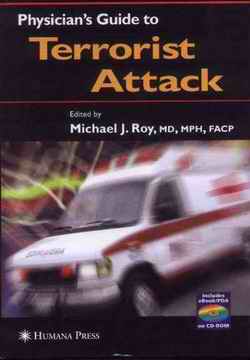
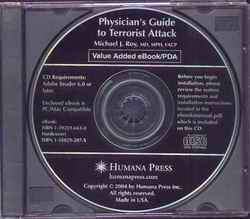
 Physician's Guide to Terrorist Attack, 1 stEdition, (includes eBook/PDA on CD-Rom) Edited by Michael J. Roy. Hard Bound, 7 " x 10".
Humana Press Inc., 999 Riverview Drive, Suite 208, Totowa, New Jersey 07512; Publication Date 27 October, 2003. xvi + 405 pages, ISBN 1-58829-207-X (Hardback, acid-free Paper), E-ISBN 1-59259-663-0. Price $99.50
 |
 |
This is such a revolutionary book, we thought we should give some extracts from it, to enable the reader to gauge a better idea about its excellence. First, the contents in detail:
 |
The book is an excellent resource for physicians likely to face a covert biological attack (from terrorists), much like the one faced just after the infamous 9/11 incident, when a number of sporadic anthrax cases surfaced all of a sudden. How are the physicians going to recognize that a particular epidemic is terroristic in origin? In chapter 3 (written by Kevin Yeskey and Stephen A. Morse), some guidelines are given. Here is what they have to say on pages 40-43:
Routine medical surveillance may reveal unusual patterns of disease presentation that would indicate a potential bioterrorism event. Some of these diseases may first appear in non-human animal populations, providing evidence of a terrorist's use of a biological agent. In some cases it may be extremely difficult to determine whether a disease is naturally occurring or introduced intentionally to cause disease. Medical surveillance is essential in the early detection of a covert release. What are the features that may indicate a covert intentional release of a biological agent? Lists of occurrences have been developed that would raise suspicion of an intentional release (9). In the case of smallpox, the mere presence of a single case would indicate that terrorism was responsible. The last human cases of smallpox were in Birmingham, England in 1978 (10), and the only publicly acknowledged stores of smallpox virus are in World Health Organization (WHO) reference laboratories in the United States and Russia (11).
Individually, the clues listed below would not directly confirm a terrorist event. They must be evaluated within the context of a full epidemiological investigation. In many cases, other possible causes must be considered, such as travel to an endemic area or re-emergence of an uncommon infectious disease. An astute clinician or an effective surveillance system will detect the presence of a disease, but the skilled epidemiologist will determine the potential source of the outbreak.
 ...The appearance of a rare or extremely uncommon disease appearing in the population would raise suspicion of a covert release, particularly if those with the disease do not have a history of travel to an endemic area or recent exposure to others who have traveled to areas where the disease may be endemic. An example of this was the outbreak of West Nile fever in New York in 1999 ... ...The appearance of a rare or extremely uncommon disease appearing in the population would raise suspicion of a covert release, particularly if those with the disease do not have a history of travel to an endemic area or recent exposure to others who have traveled to areas where the disease may be endemic. An example of this was the outbreak of West Nile fever in New York in 1999 ...
|
The appearance of a rare or extremely uncommon disease appearing in the population would raise suspicion of a covert release, particularly if those with the disease do not have a history of travel to an endemic area or recent exposure to others who have traveled to areas where the disease may be endemic. An example of this was the outbreak of West Nile fever in New York in 1999 (12). This disease had never been seen before in the United States, and although the outbreak was not the result of bioterrorism, its emergence has caused concern.
Epidemics are unusually large numbers of patients with a specific disease. Presentation of a large number of patients seeking health care for the same disease is not, in itself, enough to warrant investigations as a covert bioterrorism event. There are many naturally occurring epidemics each year; however, this may be the first indication of a release, and, in an epidemic situation, one should look for other indicators. The possibility of an intentional release should be considered in the context of a common source of exposure when there are large numbers of patients with the same disease. Large numbers of people seeking treatment at the same time is suggestive of a common source of exposure to a disease with a fixed incubation period. This would be uncommon in a naturally occurring event. An endemic disease (e.g., plague) that suddenly becomes epidemic suggests either a change in the agent (i.e., genetic modification/mutation), a change in the population's exposure pattern, or exposure of a naive subpopulation.
Only rarely do medical conditions defy explanation, and almost always, a cause of death can be determined. Unexplained syndromes could be caused by a very rare disease that goes unrecognized, a disease agent that has been genetically engineered, or a combination of different illnesses not commonly seen together. Rare or unusual diseases in the United States could indicate intentional introduction by a terrorist or, more likely, unintentional introduction through foreign travel or contact with an animal reservoir.
...Only rarely do medical conditions defy explanation, and almost always, a cause of death can be determined. Unexplained syndromes could be caused by a very rare disease that goes unrecognized, a disease agent that has been genetically engineered, or a combination of different illnesses not commonly seen together...
|
An unusual geographic distribution or seasonal occurrence of cases can represent an important clue. For example, plague is endemic in the Western United States. A case of plague in the Eastern United States would suggest either the intentional introduction of the agent or a history of travel to an endemic area. An unusual seasonable distribution of cases could suggest an intentional introduction (e.g., influenza during the summer months) outside the normal period of communicability or a new strain of the infectious agent.
Laboratory methods have been used to generate a "genetic fingerprint" that can be used to identify specific strains by comparisons with other strains of the same agent; similar methods have been used to detect genetic manipulation of the agent. Unusual strains or genetic manipulation could indicate that the agent was intentionally released.
Many agents can be transmitted to humans by one or more routes of infection (e.g., droplet, water, food). Moreover, infectious agents usually have a typical presentation, which is related to the route of transmission. An atypical route of transmission or atypical presentation of a disease is highly suggestive of an intentional exposure. For example, cutaneous anthrax is endemic in many parts of the world and is the most common form of human anthrax. The pulmonary form of anthrax (inhalational anthrax) is rare, and its presentation in the United States would be highly suspicious of an intentional release (1).
Antibiotic resistance or an increase in virulence may occur as the result of spontaneous mutations or through the natural acquisition of genetic material. However, they can also occur as a result of intentional genetic manipulation. Unexpected resistance to frontline antibiotics, more severe illness, or higher mortality rates should raise suspicion.
Part II describes the biological agents which are likely to be used by terrorists in a possible biological terroristic events. These agents are classified by CDC as category A, B and C agents. While Category A agents include organisms responsible for anthrax, plague and tularemia, category B includes Brucellosis, Q fever, Melioidosis and Glanders etc. (A complete classification of these agents appears on page 41 of this book). Most of us are aware of Category A agents, and how they could possibly be used in bioterroristic events. Here is how a category B agent (Glanders) could be used in Biological Warfare and terrorism. Numbers in parenthesis point to the references given at the end of the chapter. These extracts are from pages 153-154:
Burkholderia mallei has a low potential for contagion, but it became a candidate for biological warfare because of the efficacy of aerosolized dissemination and the lethal nature of the disease.
In World War I, the Central Powers used B. mallei against equids on the Eastern Front (72), in the United States, and in Romania (73). The glanders outbreak among Russian horses and mules on the Eastern Front had an effect on troop and supply convoys as well as on artillery movement, which were dependent on horses and mules. Human cases in Russia increased with the infections during and after the disease in animals.
...The Japanese reportedly infected horses, civilians, and prisoners of war with B. mallei during World War II. The Former Soviet Union tested B. mallei for use in biological warfare. In May of 1947 the American Association of Scientific Workers, with the consent of the military, released a detailed study of the menace of germ warfare...
|
The Japanese reportedly infected horses, civilians, and prisoners of war with B. mallei during World War II. The Former Soviet Union tested B. mallei for use in biological warfare (74). In May of 1947 the American Association of Scientific Workers, with the consent of the military, released a detailed study of the menace of germ warfare. The report warned that germ weapons rival the A-bomb as "one of the most important hazards to humanity which could result from the misuse of science." Drs. Theodore Rosebury and Elvin A. Kabat of Columbia University listed 33 bacteria and viruses that have the potential to spread mass pestilence and famine from planes. Included in their report were botulinum toxin, leptospira, anthrax, pneumonic plague, undulant fever (brucellosis), glanders, influenza, malaria, melioidosis, parrot fever (psittacosis), rabbit fever (tularemia), yellow fever, and several typhus-like diseases (75). The report noted that in 1943- 1944 the United States studied B. mallei for its biowarfare potential.
The Soviets weaponized anthrax and tested it at Vozrozdeniie Island in the Aral Sea
(76). Then, during their war in Afghanistan, the Soviets employed glanders to kill the
animal transport used by the Afghan resistance (77). More recently, Dr. Alibekov (now
known as Dr. Alibek), who was first deputy director of Biopreparat in charge of the
civilian branch of the former Soviet Union's Biowarfare program-and who continues
to monitor the work of his old colleagues-has testified that Russian scientists have
created genetically altered antibiotic-resistant strains of plague, anthrax, tularemia, and
glanders (78). According to Igor Domaradsky, former chairman of the Soviet Interagency
Science and Technology Council on Molecular Biology and Genetics, Pokrov was one of the biggest of several Soviet facilities that altogether employed some 10,000 scientists to develop antiagricultural weapons. There have been several reports of theft or diversion
of dangerous pathogens from these and other Soviet facilities; this clearly provides a
potential source for terrorists desiring to acquire glanders or other biological agents for
weaponization (79). In addition, the Monterey Institute of International Studies states
that it is probable that Egypt currently has glanders in its arsenal of agricultural biowarfare agents (80).
Part III of the book deals with various chemical agents. One of the most interesting chapters in this part is chapter 22 dealing with incapacitating agents (written by Sage W. Wiener and Lewis S. Nelson). Here is what they have to say about the agents on pages 312-313:
...Most nonchemical incapacitating agents are either too dangerous for use (such as microwave bombardment and photostimulation, which may cause retinal damage) or are likely to be ineffective against a determined enemy (such as noise and olfactory assault). American military analysts rejected the development of opioids because of difficulties with dispersal and their narrow safety ratio...
|
Many of these agents were evaluated by the U.S. Joint Non-Lethal Weapons Directorate (JNLWD) at Aberdeen Proving Grounds, MD. Although much of this work is unclassified, it has been withheld by the U.S. National Academies of Science. These agents (except for BZ and related glycolate anticholinergics) are considered by military experts to be unlikely to see use on a modern battlefield owing to a variety of factors. Most nonchemical incapacitating agents are either too dangerous for use (such as microwave bombardment and photostimulation, which may cause retinal damage) or are likely to be ineffective against a determined enemy (such as noise and olfactory assault). American military analysts rejected the development of opioids because of difficulties with dispersal and their narrow safety ratio; it would be difficult to ensure delivery of an effective but nonlethal dose. Cannabinoids and indoles are also felt to be difficult to deliver in reliably effective doses (4,5) and have a limited duration of effect. We focus here on BZ (and related compounds), because its high safety ratio renders it the most likely of these agents to be used.
It is possible, however, that this assumption may not hold true in chemical terrorism scenarios for several reasons. Terrorists are likely to be less concerned with the distinction between lethal and incapacitating agents and might be more likely to use compounds that are lethal to many of those exposed. It is also likely that the route of exposure and method of distribution might be different in a terrorist attack than on the battlefield. In warfare, inhalation of an outdoor aerosol is the usual means of delivery, whereas in a terrorist attack the agent could be used to contaminate food, water, or the ventilation system of a building. These differences may very well alter the choice of agent.
This assessment was borne out when Russian authorities reportedly used fentanyl (or
possibly a more potent derivative thereof such as carfentanil) in an attempt to rescue
hostages held in a Moscow theater in 2002. The agent was delivered through the ventilation
system of the theater, rapidly incapacitating the captors and their hostages. However,
116 hostage fatalities and hundreds of prolonged hospitalizations, presumably
owing to hypoxic brain injury, also reportedly occurred (6,7). Metabolites of halothane
were detected in the serum of two German victims, leading to some controversy over the
actual agent used (8). Halothane seems a reasonable explanation for the incredibly rapid
incapacitation seen, although it would not explain the miosis that led physicians on the
scene to suspect a nerve agent and administer atropine. If fentanyl or a derivative was in
fact the agent used, it was undeniably effective at neutralizing the hostage-takers, although
it can no longer be considered an incapacitating agent because of its high lethality (at least
in the absence of prompt airway management, ventilation, and/or antidotal therapy with
naloxone).
The last part (Part IV) deals with "residual information" such as radiation effects, explosives and psychological impact of terrorist events. The editor likes to call this section "Additional Considerations". Many of us are now awakening to the psychological effects of such terroristic events. How are physicians and psychiatrists going to deal with these effects? Many techniques are described in chapter 26 entitled "Psychological impact of terrorist events" written by Timothy J. Lacy and David M. Benedek. Here they describe a technique called "debriefing" (page 388):
Group debriefing techniques have been used in the aftermath of natural disasters and terrorist events. Debriefings offer affected persons an opportunity to join others in a group review of the traumatic event, share emotional reactions, and give some structure to their chaotic experience. Most debriefing models are designed for use with first responders such as firemen and emergency medical technicians, but debriefing has also been used for victims. There is no convincing evidence that such debriefings reduce the incidence of PTSD or other psychiatric disorders. In fact, encouraging the expression of intense emotions immediately after a recent trauma may be harmful and may even retraumatize some individuals (32-34). Nevertheless, debriefings may be of some benefit in fostering group cohesion and helping individuals deal with the post-attack chaos. Debriefings may help sustain performance, reduce the sense of isolation, and facilitate identification of those who need further mental health treatment (32,35).
...In the immediate aftermath of an attack, the most important intervention is to take care of the victims' physical needs. Blankets, bandages, food, and rest are much more important than group debriefing sessions. Victims need to know that they are being cared for, and after a terrorist attack this does not mean talking, it means safety...
|
If group debriefings are conducted, it is important that the group be composed of persons linked socially by working relationships or friendships rather than haphazardly assembled groups of people who just happen to be at the terror scene at the same time. Open and frank discussions among care providers, rescue workers, terror responders, and victims may foster a sense of cohesion and reduce individual isolation. The focus of the debriefing should be the creation of a cognitive historical narrative of the event, i.e., "what happened." Debriefings should not be quasi-psychotherapy sessions. Participants should be allowed to express their feelings about what happened if they choose, and such emotions should be supported. However, any attempt to extract the "real" or "underlying" emotions is strongly discouraged. Those with prior abusive experience, minimal ability to regulate affect, limited ego functioning, or serious pre-existing mental illness may be harmed by being "forced" to participate in highly emotional, mandatory debriefings.
In the immediate aftermath of an attack, the most important intervention is to take care
of the victims' physical needs. Blankets, bandages, food, and rest are much more important
than group debriefing sessions. Victims need to know that they are being cared for,
and after a terrorist attack this does not mean talking, it means safety. Previous experience
with emergency operations in response to terrorist hoaxes has shown that neglect of
comfort issues and lack of respect for the dignity or privacy of those subjected to quarantine
or decontamination are among the most distressing aspects of these operations.
-Anil Aggrawal
[ Aims and Objectives ] [ FAQ ] [ Editorial Board ] [ Contributing Partners ] [ Sitemap ]
[ Paper/Thesis submission guidelines ] [ Editorials - Cumulative Index ] [ Discussion ] [ Chat room ] [ Be our sponsor! ]
[ Cumulative index of Book Reviews sorted by | Publishers |
General Interest Books |
Technical Books ] [ Animated Reviews ] [ Featured Reviews ]
[ Reviews with Quizzes ] [ Links ] [ Submit books/journals/software/multimedia for review ] [ journal CD ] [ History of the Journal ] [ Interviews ] [ Credits ]
[ Cumulative index of | Theses/dissertations | [ Online Courses ] [ Awards ] [ Anil Aggrawal's Internet Journal of Book Reviews - Sister Publication ]
[ Undergraduate section | Postgraduate section ]
[ Cumulative reviews of Software/Multimedia | Books on CD/Audio tapes ] | Calenders | Models ] [ contact us ]
Questions or
suggestions ? Please use ICQ 19727771
or email to
dr_anil@hotmail.com
Page Professor Anil Aggrawal via
ICQ
 Order Humana Press Books by clicking here.

 Request a PDF file of this review by clicking here. (If your screen resolution can not be increased, or if printing this page is giving you problems like overlapping of graphics and/or tables etc, you can take a proper printout from a pdf file. You will need an Acrobat Reader though.)
N.B. It is essential to read this journal - and especially this review as it contains several tables and high resolution graphics - under a screen resolution of 1600 x 1200 dpi or more. If the resolution is less than this, you may see broken or overlapping tables/graphics, graphics overlying text or other anomalies. It is strongly advised to switch over to this resolution to read this journal - and especially this review. These pages are viewed best in Netscape Navigator 4.7 and above.

 [ Major links ]
Books for review must be submitted at the following address.
Professor Anil Aggrawal (Editor-in-Chief)
Anil Aggrawal's Internet Journal of Forensic Medicine and Toxicology
S-299 Greater Kailash-1
New Delhi-110048
India
Click here to contact us.
This page has been constructed and maintained by Dr. Anil Aggrawal, Professor of Forensic Medicine, at the Maulana Azad Medical College, New Delhi-110002. You may want to give me the feedback to make this pages better. Please be kind enough to write your comments in the guestbook maintained above. These comments would help me make these pages better.
 IMPORTANT NOTE: ALL PAPERS APPEARING IN THIS ONLINE JOURNAL ARE COPYRIGHTED BY "ANIL AGGRAWAL'S INTERNET JOURNAL OF FORENSIC MEDICINE AND TOXICOLOGY" AND MAY NOT BE REPOSTED, REPRINTED OR OTHERWISE USED IN ANY MANNER WITHOUT THE WRITTEN PERMISSION OF THE WEBMASTER

home
> Volume 5, Number 1, January - June 2004
> Reviews
> Technical Books
> Page 9: Physician's Guide to Terrorist Attack
> Physician's Guide to Terrorist Attack (Extracts) (you are here)
Navigation ribbon

