


|
|
|
|
 Forensic Pathology Reviews, Vol. 1, Edited by Michael Tsokos. Hard Bound, 6" x 9".
Humana Press Inc., 999 Riverview Drive, Suite 208, Totowa, New Jersey 07512; Publication Date 15 April, 2004. xii + 365 pages, ISBN 1-588-29-414-5. Price $99.50
 Official Site:Click here to visit
 |
This is the first volume in a series containing 15 reviews dealing mainly with anatomical pathology with relevance for the forensic pathologist. I started reading with great anticipation as this kind of review series that have existed in many other specialties for years is a great way to remain up to date with "the cutting edge" of the field as the editor Michael Tsokos expresses it in the preface.
 |
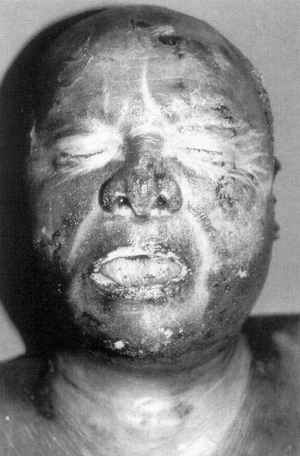
The first article on "Morphological signs in burned bodies" is maybe not so "cutting edge" but a comprehensive and rather detailed overview. It was leaving me with the feeling that there is no certain sign to tell if a person was alive or not before the fire started. According to the author, Michael Bohnert, not even soot aspiration and epidural heat heamotoma are certain intravital signs.
The following review deals with patterns of injuries in deaths by kicking and trampling. The authors (Henn and Lignitz) have a large material, 422 cases from northern Germany. The conclusion of the survey is that the injuries to the head are disproportionally represented regarded its small volume compared to the rest of the body, that jumping on the supine body might not leave any external signs but severe organ injuries such as rupture of the liver and that many victims are alcoholics. Kicks to the head are one of the few instances where I have seen acute traumatic rupture to vertebral artery but this type of injury is not mentioned in the article.
Timing of injuries has been little of an obsession of forensic pathologists doing research. It is apparent that the rewards for this research so far have not been comparable to the efforts. The review by Roland Hausman on timing of cerebral traumatic lesions shows that we are far from achieving the precision needed to be of any practical use in the few forensic cases where it might be important for the investigation of crime. You could say the same for skin wounds and I suspect that this topic will be reviewed in an upcoming volume of FPR.
 |
The next review written by Büttner and Weis deals with another neuropathology topic namely CNS alterations in drug abuse. It deals with the most common drugs of abuse (not alcohol) and what we know about cerebral alterations from these, both experimentally and on cadavers. It is stated that we know very little of the specific influence of each separate drug on the morphology of the brain. The reference list is extensive and possibly very useful for further studies of this subject.
The lack of investigation routines of sudden cardiac death is maybe one reason why many cases never get a pathological diagnosis. The dissection techniques and sampling of tissue from the heart is not up to date among forensic pathologists. In the review by Fineschi and Pomara-A forensic pathological approach in sudden cardiac death- this is clearly stated. However, the lengthy descriptions of how to measure the degree of stenosis in coronary artery specimens appears to me a bit old-fashioned and an unpractical approach to the routine investigation of sudden cardiac deaths. Rather, every forensic pathologist should be familiar with dissection of the conduction system and with the latest immunohistochemical methods for detection of early ischemic injury to the myocardium. I hope there will be comprehensive reviews of those topics in upcoming volumes.
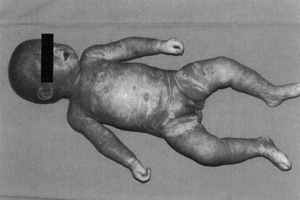
One is reminded of the large scope of forensic pathology when reading the following chapters of neonato- infanticide and sudden infant death. The former are not everyday occurrences in our practice so the review by Dr Byard should be good to have as a reference. The paper on Sudden infant death is by necessity short and confined to definitions and medico-legal problems. The research on SIDS has been extensive and there are already many good books symposia and reviews on that topic. Still it appears that we are far from understanding the causes of SIDS and the numerous hypotheses often rest, on uncertain foundations, and are sometimes contradictory. The authors (Byard and Krauss) discuss the theoretical and legal consequences of these uncertainties and the fact that the criteria for the diagnosis as stated in the International Standardized Autopsy protocol for SIDS are not followed everywhere as rigorously as could be wished for.
Forensic, i.e. post-mortem bacteriology, is a somewhat neglected area. Is it feasible to take samples for bacteriological cultures in cases of suspected septicemia in corpses showing signs of decomposition? And which pathogenic bacteria will survive in the body post-mortem and for how many days in the refrigerating room? The two articles by the editor himself (on Mycoplasma pneumoniae pneumonia) and his co-author Dr Sperhake(on Watherhouse-Friedrichsen Syndrome, WFS) do not answer those questions specifically. In Mycoplasma pneumoniae pneumonia the diagnosis rests on serology rather than culturing the micro organism. The bacterium is too small to be seen in the microscopic slides and the histopathological changes in the lung are rather non-specific. However, the patients history and the histological findings together should warrant further serological investigation. The authors state that in cases of meningitis with WFS or myocarditis, diplococci may be seen microscopically, especially in the heart, but meningococci may be difficult to culture after some time post-mortem. A fact that the authors do not mention is that pneumococci commonly causes meningitis and WFS and in my experience they are easier to culture from blood and cerebrospinal fluid even several days after death. A comprehensive review on what microorganisms of significance will survive and proliferate post-mortem will hopefully be reviewed in a subsequent volume?
 |
 |
The following chapter on autoerotic deaths is a compilation of many spectacular case studies of this type of perverted human behavior but will give no real understanding of the phenomenon. On the other hand, that would not be forensic pathology.
Then there is a review on certain aspects of hypothermia, i.e. paradoxical undressing and hide and die syndrome. The latter might not be seen as often as the former, and the authors speculate that it should be caused by some primitive, innate behavior, like going to the "elephants graveyard", which I find a bit out of place in the context forensic pathology. The editor returns with an article on Pathological Features of Maternal Death From HELLP Syndrome. I suspect that, although having forensic implications,, in many countries these cases will be investigated by clinical pathologists.
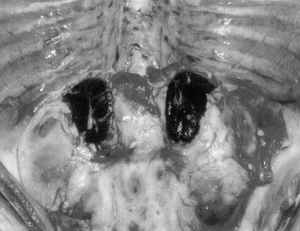
Injuries from resuscitation procedures are something that we are encountered with frequently. As the author, Dr Darok states it is utterly important that the forensic pathologist is familiar with this type of injuries to be able to distinguish them from intravital lesions. The article is systematic and comprehensive but to be really useful it should have been even more thoroughly researched. For example, I lack a discussion of injuries to spinal column due to cardiac compression, and the problem of contraction bands in the myocardium after defibrillation.
An extensive and comprehensive review of a central subject in forensic toxicology follows: Postmortem Alcohol Interpretation of Drs Hunsaker and Hunsaker. As a forensic pathologist you should be able to interpret alcohol concentration in post-mortem fluids. The article covers the many problems and sources of errors in analyzing and interpreting data. Especially, the discussion of the Widmark equations for extrapolation of alcohol concentrations was very enlightening. Ethanol is probably the most researched and well-characterized substance in the context of forensic toxicology, and its behavior post-mortem is rather well understood. In comparison, the interpretation of post-mortem concentration of many drugs, which are bound to plasma proteins and with uneven distribution in the tissues and fluids is a quagmire.
The last review covers Iliopsoas Muscle Hemorrhage. As a forensic pathologist you will see this phenomenon now and then, not only in obvious cases of trauma. As a whole, this first volume live up to the intentions and expectations. The majority of the authors are from Germany. Hopefully, the nationality of the authors will be more varied in upcoming volumes. The layout of the volume is attractive but on the back-cover I have found a minor error : Forensic Science Review should be Forensic Pathology Reviews.
This series will hopefully continue for a while and should have a central place in the library of every Forensic Medical Department.
 |
-Erik Edston Dr. Erik Edston is on the editorial board of Anil Aggrawal's Internet Journal of Forensic Medicine and Toxicology. Click image to have more information about him. |
 Review 1 by Erik Edston, Sweden
Review 3 by Benjamin Swift, UK
Review 4 by Ronald Wright, USA
An Exclusive interview with Michael Tsokos
Other reviews of this book:
Order Humana Press Books by clicking here.
or via telephone: (973) 256-1699 or Fax: (973) 256-8341 or Email:humana@humanapr.com
 Request a PDF file of this review by clicking here. (If your screen resolution can not be increased, or if printing this page is giving you problems like overlapping of graphics and/or tables etc, you can take a proper printout from a pdf file. You will need an Acrobat Reader though.)
N.B. It is essential to read this journal - and especially this review as it contains several tables and high resolution graphics - under a screen resolution of 1600 x 1200 dpi or more. If the resolution is less than this, you may see broken or overlapping tables/graphics, graphics overlying text or other anomalies. It is strongly advised to switch over to this resolution to read this journal - and especially this review. These pages are viewed best in Netscape Navigator 4.7 and above.
-Anil Aggrawal


 [ Major links ]
[ Aims and Objectives ] [ FAQ ] [ Editorial Board ] [ Contributing Partners ] [ Sitemap ]
[ Paper/Thesis submission guidelines ] [ Editorials - Cumulative Index ] [ Discussion ] [ Chat room ] [ Be our sponsor! ]
[ Cumulative index of Book Reviews sorted by | Publishers | General Interest Books | Technical Books ] [ Animated Reviews ] [ Featured Reviews ]
[ Reviews with Quizzes ] [ Links ] [ Submit books/journals/software/multimedia for review ] [ journal CD ] [ History of the Journal ] [ Interviews ] [ Credits ]
[ Cumulative index of | Theses/dissertations | [ Online Courses ] [ Awards ] [ Anil Aggrawal's Internet Journal of Book Reviews - Sister Publication ]
[ Undergraduate section | Postgraduate section ]
[ Cumulative reviews of Software/Multimedia | Books on CD/Audio tapes ] | Calenders | Models ] [ contact us ]
Books for review must be submitted at the following address.
Professor Anil Aggrawal (Editor-in-Chief)
Anil Aggrawal's Internet Journal of Forensic Medicine and Toxicology
S-299 Greater Kailash-1
New Delhi-110048
India
Click here to contact us.
This page has been constructed and maintained by Dr. Anil Aggrawal, Professor of Forensic Medicine, at the Maulana Azad Medical College, New Delhi-110002. You may want to give me the feedback to make this pages better. Please be kind enough to write your comments in the guestbook maintained above. These comments would help me make these pages better.
 IMPORTANT NOTE: ALL PAPERS APPEARING IN THIS ONLINE JOURNAL ARE COPYRIGHTED BY "ANIL AGGRAWAL'S INTERNET JOURNAL OF FORENSIC MEDICINE AND TOXICOLOGY" AND MAY NOT BE REPOSTED, REPRINTED OR OTHERWISE USED IN ANY MANNER WITHOUT THE WRITTEN PERMISSION OF THE WEBMASTER
Questions or suggestions ? Please use ICQ 19727771 or email to dr_anil@hotmail.com
Page Professor Anil Aggrawal via ICQ

|


