


|
|
|
|
 Forensic Pathology Reviews, Vol. 2, Edited by Michael Tsokos. Hard Bound, 6" x 9".
Humana Press Inc., 999 Riverview Drive, Suite 208, Totowa, New Jersey 07512; Publication Date 9 December, 2005. xvi + 311 pages, ISBN 1-58829-415-3. Price $99.50
 Official Site:Click here to visit
 Amazon link:Click here
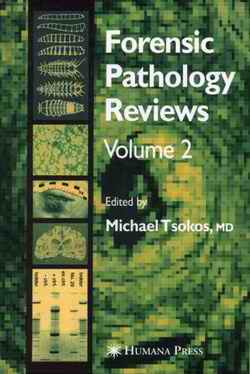 |
This volume continues the tradition of the international reviews of important new information in forensic pathology. Again, as with the first volume, the subject matter is eclectic and well covered. While this book is not a substitute for a general textbook in forensic pathology, it certainly belongs on the bookshelf of every program teaching forensic science and of every practitioner of forensic pathology.
The internationalism, which was present in the first volume, is reduced somewhat with the sixteen authors representing only three countries of origin. Dr. Tsokos and twelve other of the contributors are German. One contributor is Australian and three are from the United States. Of the thirteen chapters, ten are by German authors, one by a German and Australian and two by authors from the United States. As I am from the United States, I find that the German orientation is quite broadening and provides for a slightly different perspective than is generally seen in works predominately by authors from the United States or England.
The choice of chapters is somewhat puzzling, and I cannot discern a pattern in their selection. This applies to the first volume and now continues in the second. However, as this is to be generally a reference text with the latest in research, the choice of titles probably is determined more by the availability of authors, than by the homogeneity of the topics.
Turning to the individual chapters, the first is "Death as a Result of Starvation Diagnostic Criteria" There are seventy-one references the most recent in 2003. The table listing the weight loss with fasting, from a German reference in 1962 is probably worth the cost of admission. A mention of Bichat's fat pad being lost in starvation was certainly interesting. The author indicates that he has personal experience in six cases of starvation of infants, which is certainly a very high number for a peace time practitioner, and indicates his interest in the subject. Again, there is the occasional typo or misused word which could be caught by more careful editing. ".poor skin turgor, tinting of the skin" probably had less to do with the color as with "tenting of the skin."
 |
Skull Injuries Caused by Blows with Glass Bottles," is certainly an esoteric discussion, but again extremely helpful if one is presented with a case. In the first case, discussed the assailants beat a teenager after covering his head with a blanket, using three different bottles, one whiskey and two wine. The bottles all broke, but the victim had no injuries. This account, coupled with nine others covers the expected possibilities with these sorts of weapons. Remarkably, experiments were conducted using bottles of various types employed to strike the heads of deceased persons. Again, no serious injuries were observed in the experiments. Only nineteen references are listed, and only two are in English, the rest German. This reflects the esoteric nature of the discussion, and again demonstrates the usefulness of the work.
 |
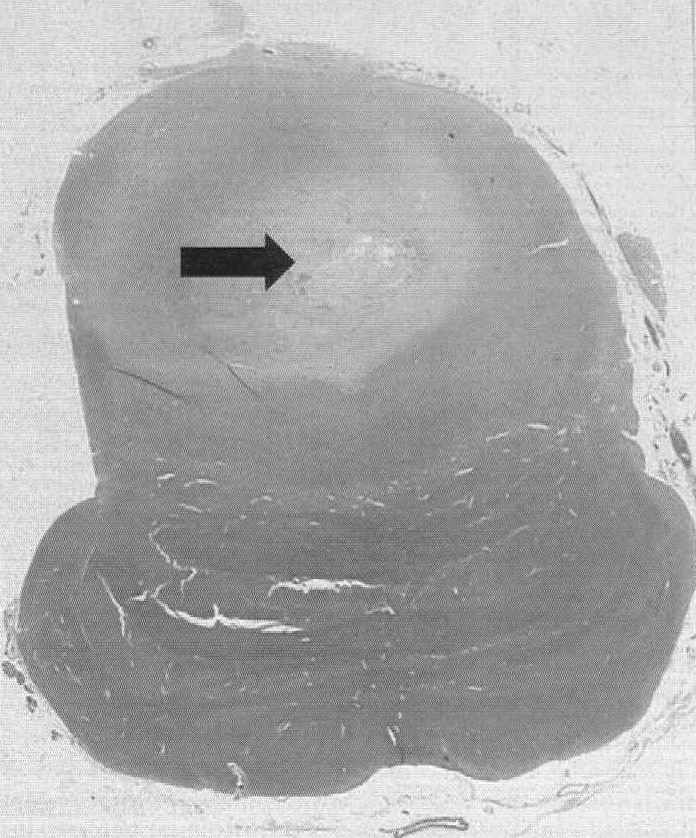 |
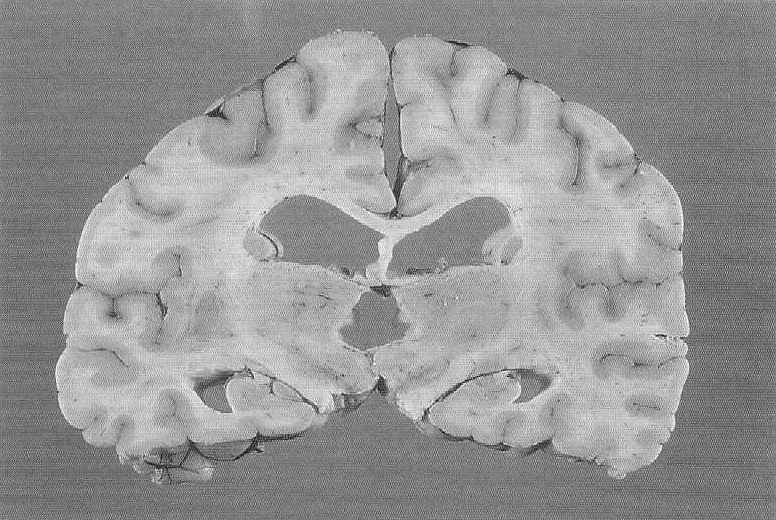
The third chapter concerns "Primary Cerebral Neoplasms as a Cause of Sudden, Unexpected Death" is a very good review of this subject area. There are 42 references, the most recent being 2002. Again, a typo indicating the "brain is drained in buffered formaline for fixation" is a very strange way to both spell formalin and to discuss the placement of the brain in formalin.
"Obesity Epidemic in the United States, A Cause of Morbidity and Premature Death," is one of the two chapters by authors from the United States. This is very good discussion of this subject and has ninety-seven references the latest being 2003.
"Infant and Early Childhood Asphyxial Deaths," is a generally good review, although I fairly strongly disagree with the contention that dilatation of the ventricle and atrium of the right heart are sometimes mentioned as indicative of asphyxia, but unfortunately they are not." The discussion of hemorrhagic microscopic findings, while downplaying the usefulness of this sign, at least they agree that this finding is helpful.
The discussion of "Complex Suicides" is fascinating and discusses these interesting events. There are ninety-six references the latest of which are 2002.
The "Occupation-Related Suicides" is also a very interesting discussion of very strange and unusual cases with eighty-one references the most recent being 2002.
The "Sudden, Unexpected Death Related to Viral Myocarditis" discusses this very often difficult to diagnose condition. There are seventy-four references the most recent 2003.
"Human Primitive Behavior," discusses the origins of paradoxical undressing seen in cases of hypothermia and expands this discussion to include a number of other primitive behaviors including hiding and covering. There are only thirteen references in this understudied area, but the latest is 2004.
"Arthropods and Corpses" discusses the usefulness of larval and adult arthropods found in and around deceased bodies. Included is a discussion of drug testing of arthropods as a means to attempt to determine if drugs were involved in deaths where the body had undergone extreme decomposition. A discussion of DNA testing indicates that this may be useful where the native DNA has hydrolyzed beyond usefulness. There are one hundred twenty-one references up to 2003.
"Practical Toxicology for the forensic Pathologist," is another jewel which alone would make the book worth buying. This is another chapter written by a person from the United States, and the references are primarily English. I strongly disagree with the statement that ethanol had no odor and that one usually smells the metabolites and congeners associated with ethanol ingestion. Many of us can smell pure ethanol, although I am unaware of what the percentage is. There are one hundred thirty-five references the most recent being from 2003
"Long-Term Effects of Anabolic-Androgenic-Steroid Abuse" discusses the anatomic abnormalities found with the use of this class of drugs. There are sixty-two references the most recent being 2003.
The last chapter discusses "Subendocardial Hemorrhages" Again this is an arcane issue which is rarely discussed but is encountered from time to time in forensic cases. There are sixty-seven references the most recent is 2002.
This is an excellent book which should be inducted in most libraries.
-Ronald Wright
 |
-Ronald Wright Dr. Ronald K. Wright is Associate Professor of Pathology and Director of Forensic Pathology Division at Jackson Memorial Hospital Miami, Florida. He can be contacted at rkw@rkwrightmd.com. Dr. Wright is on the left as you look at the photograph. |
 Review 1 by Erik Edston, Sweden
Review 3 by Ronald Wright, USA
An Exclusive interview with Michael Tsokos
Review of Forensic Pathology Reviews (vol 1) appearing in this journal [Vol 5, no. 2 (July - December 2004)]
Other reviews of this book:
Order Humana Press Books by clicking here.
or via telephone: (973) 256-1699 or Fax: (973) 256-8341 or Email:humana@humanapr.com
Request a PDF file of this review by clicking here. (If your screen resolution can not be increased, or if printing this page is giving you problems like overlapping of graphics and/or tables etc, you can take a proper printout from a pdf file. You will need an Acrobat Reader though.)
N.B. It is essential to read this journal - and especially this review as it contains several tables and high resolution graphics - under a screen resolution of 1600 x 1200 dpi or more. If the resolution is less than this, you may see broken or overlapping tables/graphics, graphics overlying text or other anomalies. It is strongly advised to switch over to this resolution to read this journal - and especially this review. These pages are viewed best in Netscape Navigator 4.7 and above.
-Anil Aggrawal


 [ Major links ]
[ Aims and Objectives ] [ FAQ ] [ Editorial Board ] [ Contributing Partners ] [ Sitemap ]
[ Paper/Thesis submission guidelines ] [ Editorials - Cumulative Index ] [ Discussion ] [ Chat room ] [ Be our sponsor! ]
[ Cumulative index of Book Reviews sorted by | Publishers | General Interest Books | Technical Books ] [ Animated Reviews ] [ Featured Reviews ]
[ Reviews with Quizzes ] [ Links ] [ Submit books/journals/software/multimedia for review ] [ journal CD ] [ History of the Journal ] [ Interviews ] [ Credits ]
[ Cumulative index of | Theses/dissertations | [ Online Courses ] [ Awards ] [ Anil Aggrawal's Internet Journal of Book Reviews - Sister Publication ]
[ Undergraduate section | Postgraduate section ]
[ Cumulative reviews of Software/Multimedia | Books on CD/Audio tapes ] | Calenders | Models ] [ contact us ]
Books for review must be submitted at the following address.
Professor Anil Aggrawal (Editor-in-Chief)
Anil Aggrawal's Internet Journal of Forensic Medicine and Toxicology
S-299 Greater Kailash-1
New Delhi-110048
India
Click here to contact us.
This page has been constructed and maintained by Dr. Anil Aggrawal, Professor of Forensic Medicine, at the Maulana Azad Medical College, New Delhi-110002. You may want to give me the feedback to make this pages better. Please be kind enough to write your comments in the guestbook maintained above. These comments would help me make these pages better.
 IMPORTANT NOTE: ALL PAPERS APPEARING IN THIS ONLINE JOURNAL ARE COPYRIGHTED BY "ANIL AGGRAWAL'S INTERNET JOURNAL OF FORENSIC MEDICINE AND TOXICOLOGY" AND MAY NOT BE REPOSTED, REPRINTED OR OTHERWISE USED IN ANY MANNER WITHOUT THE WRITTEN PERMISSION OF THE WEBMASTER
Questions or suggestions ? Please use ICQ 19727771 or email to dr_anil@hotmail.com
Page Professor Anil Aggrawal via ICQ

|


