


|
|
|
|
 Clinical Forensic Medicine - A Physician's Guide, 2ndEdition, Edited by Margaret M. Stark. Hard Bound, 6" x 9". [Includes eBook/PDA on CD-ROM]. Foreword by Sir John Stevens, former Commissioner of the Metropolitan Police Service, London, UK
Humana Press Inc., 999 Riverview Drive, Suite 208, Totowa, New Jersey 07512; Publication Date: 11 April 2005. xvii + 438 pages, ISBN 1-58829-368-8, E-ISBN 1-59259-913-3. List price US $99.50 (10% discount with online order).
 Amazon Link: Click here to visit
 |
This is precisely the kind of book every forensic researcher (not necessarily a forensic medic) dreams of getting: authoritative, comprehensive, up to date.
And to begin, a few words on the electronic book. Many publishers would have been content with providing the CD, but I see with the satisfaction of a middle-aged professional that in this case a whole page is given to minute instructions on how to use it. Let's face it: many an established researcher, physician, lawyer, has to learn how to use modern technology.
It is impossible to condense such a book, which is at the same time extensive and dense. The chapters are: 1) The history and development of clinical forensic medicine worldwide, by Jason Payne-James; 2) Fundamental principles, by Roy N. Palmer; 3) Sexual assault examination, by Deborah Rogers and Mary Newton; 4) Injury assessment, Documentation, and interpretation, by J. Payne-James, Jack Crane, and Judith A. Hinchliffe; 5) Non-accidental injury in children, by Amanda Thomas; 6) Crowd-control agents, by Kari Blaho-Owens; 7) Medical issues relevant to restraint, by Nicholas Page; 8) Care of detainees, by Guy Norfolk and M. M. Stark; 9) Infectious diseases: The role of the Forensic Physician, by Felicity Nicholson; 10) Substance misuse, by M.M. Stark and G. Norfolk; 11) Deaths in custody, by Richard Shepherd; 12) Traffic medicine, by Ian F. Wall and S. B. Karch.
 |
This book refers to Forensic Medicine in England and Wales. (Perhaps it should be explained for the benefit of the general reader that Scotland has a different legislation.) A most thought-provoking item is Table 3, with the responses to a questionnaire on clinical forensic practice around the world (January 2003). Only fifteen countries are listed, but the mere stating of the questions suffices.
 ...The chapters on crowd-control agents and on non-accidental injury in children are particularly interesting. One thing I should like to see is more information on non-accidental injuries to children offered to (and hammered into) the general public. Even some adults who would not spank children will give them a shake. They should learn how dangerous this can be... ...The chapters on crowd-control agents and on non-accidental injury in children are particularly interesting. One thing I should like to see is more information on non-accidental injuries to children offered to (and hammered into) the general public. Even some adults who would not spank children will give them a shake. They should learn how dangerous this can be...
|
The chapters on crowd-control agents and on non-accidental injury in children are particularly interesting. One thing I should like to see is more information on non-accidental injuries to children offered to (and hammered into) the general public. Even some adults who would not spank children will give them a shake. They should learn how dangerous this can be.
There are many subjects on which one takes common sense for granted, but case history tells us it should not. Let's take professional secrecy. "In the United Kingdom, a psychiatrist was sued because he had released without the consent of a patient who was violent, a report prepared at the request of the patient's solicitors in connection with an application for release from detention." The solicitors "decided not to use the report" because they wanted a report in favour of, not against, release. "The psychiatrist was so concerned about his findings that he released a copy of the report to the relevant authorities, and as a consequence, the patient's application for release was refused." The patient sued. His claim was rejected at court. Very properly, if anybody wants my opinion. It is accepted in most countries that it is no crime to break the law in order to avoid a greater evil. If the psychiatrist was convinced that the patient was a danger to others, then protecting persons was more important than professional secrecy. I feel confused about the solicitors who wanted to release a violent patient from detention.
Some stories would be dismissed as malicious invention if one read them in an ordinary newspaper. We are told that a FME left for a vacation at the time she was supposed to appear at court. She was condemned for contempt of court. Now, how could a grown, intelligent, cultured person just go away? There are proper paths to change the date of a court appearance, and if her vacation had been planned at the time of the first summons she could very well have stated that she would be available until such and such date, and no later, or else after her return. Do physicians need to be told such things? It is plain that this one did.
...Medical practitioners will be interested in the on the paragraphs on Buprenorphine and Naloxone. the former is useful in detoxification from opiates, the latter reverses the effects of severe intoxication, yet there are counter-indications for each of these. The table of substances which affect the rate of stomach emptying (p. 304) will be of the greatest interest as well. While the knowledge itself is probably within the scope of a physician, the point is one which may be argued in court, and an up-to-date medical book is a weighty argument to back an expertise...
|
For that matter, do physicians need to be told that an unopened swab should be sent as control for its batch? Safer to repeat it. Indeed, in some countries the career of Medicine is so far divorced from any learning of industrial chemistry, that a physician might be excused for not thinking of the control swab, unless told.
In Biologist's Folklore, there is a saying (pirated, I'm sure, from somewhere else, but I never found out the source): "Better pass for a dummy five minutes than your whole life". Do ask whether this lamp can be plugged into this socket. The others will forget your question after five minutes. But if you happen to plug any electrical appliance into an unsuitable socket, many things may happen. All interesting, none pretty. And you'd be reminded of them for the rest of your life.
Readers of many countries will be rather surprised at the paragraph on Harm minimization (Substance misuse, 2.2.). It appears that the physician is required to advise any addict on the risk of blood-borne viruses, the availability of hepatitis B vaccinations, the hazard of injections vs. smoking and of injections on muscle or skin vs. on a vein (intuitively, one should think the opposite), the need to avoid sharing needles, etc., to use different sites for injection, to search medical assistance if pain, redness or pus collected under skin at injection site...
I have a hunch that in some parts of the world, such a programme would be construed as tolerating drug misuse. Yet once rehabilitation programmes are offered, there is not much to be done with those who will not take them. When I was working in Belgium in the nineties, there was some to-do in the papers about a drug-addict community in Switzerland. It appears that they were given quite a bit of social aid, provided with needles and so on to minimize the risk of contagion, and of course, they were offered rehabilitation if they would take it. What made the news was that an addicted girl under the legal age of consent was living in a marital relationship with an adult male addict. It appears that they were some time figuring out that (given the experience of the alleged victim) there was no crime in the spirit of the law. This was impressed in my memory by the fact that a little later I was visited by a girl from Argentina, a student on one of those brief scholarships that allow roaming about, and one of her comments was, as far as I can reproduce the wording: "You know, in Switzerland they have drug addicts living in the street and nobody does anything." Apparently, giving them clean needles and medical advise and supervising their family life is doing nothing. It took me years to realize that, while some of us enjoy feeling useful, there are others who get a "kick" out of criticizing, but none out of helping their neighbour.
...Here (the chapter on "Deaths in custody") is where the readers of the Third World feel just where the shoe pinches. Everybody knows why. It is a pity that a certain segment of society should shrug this off as the normal behaviour of police agents (which leaves them with a clear conscience just because they aren't policemen), instead of insisting that people with undesirable traits are weeded out of the forces and the rest teach the proper proceedings (which would involve work, and might not be politically correct at the moment). Police are not stupid, violent and wicked by nature. ..
|
Medical practitioners (your humble critic is a Biologist) will be interested in the on the paragraphs on Buprenorphine and Naloxone. the former is useful in detoxification from opiates, the latter reverses the effects of severe intoxication, yet there are counter-indications for each of these. The table of substances which affect the rate of stomach emptying (p. 304) will be of the greatest interest as well. While the knowledge itself is probably within the scope of a physician, the point is one which may be argued in court, and an up-to-date medical book is a weighty argument to back an expertise. A similar subject is that of pierced and ornamented tongues; we are told in the chapter on traffic deaths that a tongue stud does not affect the outcome of the breath alcohol test.
Deaths in custody. Now this is an interesting chapter. Here is where the readers of the Third World feel just where the shoe pinches. Everybody knows why. It is a pity that a certain segment of society should shrug this off as the normal behaviour of police agents (which leaves them with a clear conscience just because they aren't policemen), instead of insisting that people with undesirable traits are weeded out of the forces and the rest teach the proper proceedings (which would involve work, and might not be politically correct at the moment). Police are not stupid, violent and wicked by nature. Police should be obedient, and law should ensure that no one gives them unethical commands. Police should be ready for physical action, which involves training, and the training should ingrain the limits as well as the responses. Police risk their lives in protection of lives and property, and they should see themselves as part of that society they protect.
On a lighter note, it is reassuring to read that neck holds in martial arts are seldom associated with fatalities. I felt rather worried by this subject, as I practice Aikido. In actual fact, a tatami (a traditional Japanese flooring made of woven straw) in the vicinity of a Dan (Black Belt) is one of the safest places in the world. A Dan practicing with a beginner will just rearrange said beginner as if he/she was a camellia in an ikebana. (When Black Belts want to stage a "violence scene", they call up a Brown Belt, since the latter can take the most impressive falls without getting hurt.) Still, in certain holds the forearm is placed against the throat, and when one knows about reflex cardio-vagal failure-.
To crown the sum of manifold information crammed in this comprehensive work, we are given what so many contemporary readers often clamour for: a list of useful website addresses (p. 425).
Briefly, this is a modern, solid, extensive, detailed book on Forensic Medicine; a must for any practitioner that can afford to keep his library up-to-date. I cannot better round this review up than with a quotation- a quotation which did not strike me as terribly original, but as one of those simple precepts that cannot be repeated too often: "You will never know when a major trial will turn on a small detail that you once recorded (or, regrettably, failed to record)".
-Dr. Adriana Oliva
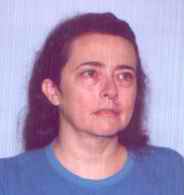 |
-Adriana Oliva Adriana Oliva is a senior editor associated with this journal since its inception. For more information about her, please click here. She can be contacted at aoliva@macn.gov.ar |
Order Humana Press Books by clicking here.
or via telephone: (973) 256-1699 or Fax: (973) 256-8341 or Email: humana@humanapr.com
 Request a PDF file of this review by clicking here. (If your screen resolution can not be increased, or if printing this page is giving you problems like overlapping of graphics and/or tables etc, you can take a proper printout from a pdf file. You will need an Acrobat Reader though.)
N.B. It is essential to read this journal - and especially this review as it contains several tables and high resolution graphics - under a screen resolution of 1600 x 1200 dpi or more. If the resolution is less than this, you may see broken or overlapping tables/graphics, graphics overlying text or other anomalies. It is strongly advised to switch over to this resolution to read this journal - and especially this review. These pages are viewed best in Netscape Navigator 4.7 and above.
-Anil Aggrawal


 [ Major links ]
[ Aims and Objectives ] [ FAQ ] [ Editorial Board ] [ Contributing Partners ] [ Sitemap ]
[ Paper/Thesis submission guidelines ] [ Editorials - Cumulative Index ] [ Discussion ] [ Chat room ] [ Be our sponsor! ]
[ Cumulative index of Book Reviews sorted by | Publishers | General Interest Books | Technical Books ] [ Animated Reviews ] [ Featured Reviews ] [ E-books ]
[ Reviews with Quizzes ] [ Links ] [ Submit books/journals/software/multimedia for review ] [ journal CD ] [ History of the Journal ] [ Interviews ] [ Credits ]
[ Cumulative index of | Theses/dissertations | [ Online Courses ] [ Awards ] [ Anil Aggrawal's Internet Journal of Book Reviews - Sister Publication ]
[ Cumulative reviews of Software/Multimedia | Books on CD/Audio tapes ] | Calenders | Models ] [ contact us ]
[ Undergraduate section | Postgraduate section ] [ Forensic gadgets/toys/other tidbits ]
Books for review must be submitted at the following address.
Professor Anil Aggrawal (Editor-in-Chief)
Anil Aggrawal's Internet Journal of Forensic Medicine and Toxicology
S-299 Greater Kailash-1
New Delhi-110048
India
Click here to contact us.
This page has been constructed and maintained by Dr. Anil Aggrawal, Professor of Forensic Medicine, at the Maulana Azad Medical College, New Delhi-110002. You may want to give me the feedback to make this pages better. Please be kind enough to write your comments in the guestbook maintained above. These comments would help me make these pages better.
 IMPORTANT NOTE: ALL PAPERS APPEARING IN THIS ONLINE JOURNAL ARE COPYRIGHTED BY "ANIL AGGRAWAL'S INTERNET JOURNAL OF FORENSIC MEDICINE AND TOXICOLOGY" AND MAY NOT BE REPOSTED, REPRINTED OR OTHERWISE USED IN ANY MANNER WITHOUT THE WRITTEN PERMISSION OF THE WEBMASTER
Questions or suggestions ? Please use ICQ 19727771 or email to dr_anil@hotmail.com
Page Professor Anil Aggrawal via ICQ

|


